
This article is authored by Ananta Chopra, a third year, B.A. LL.B. (Hon’s) student at the University School of Law and Legal Studies, GGSIPU.
Introduction
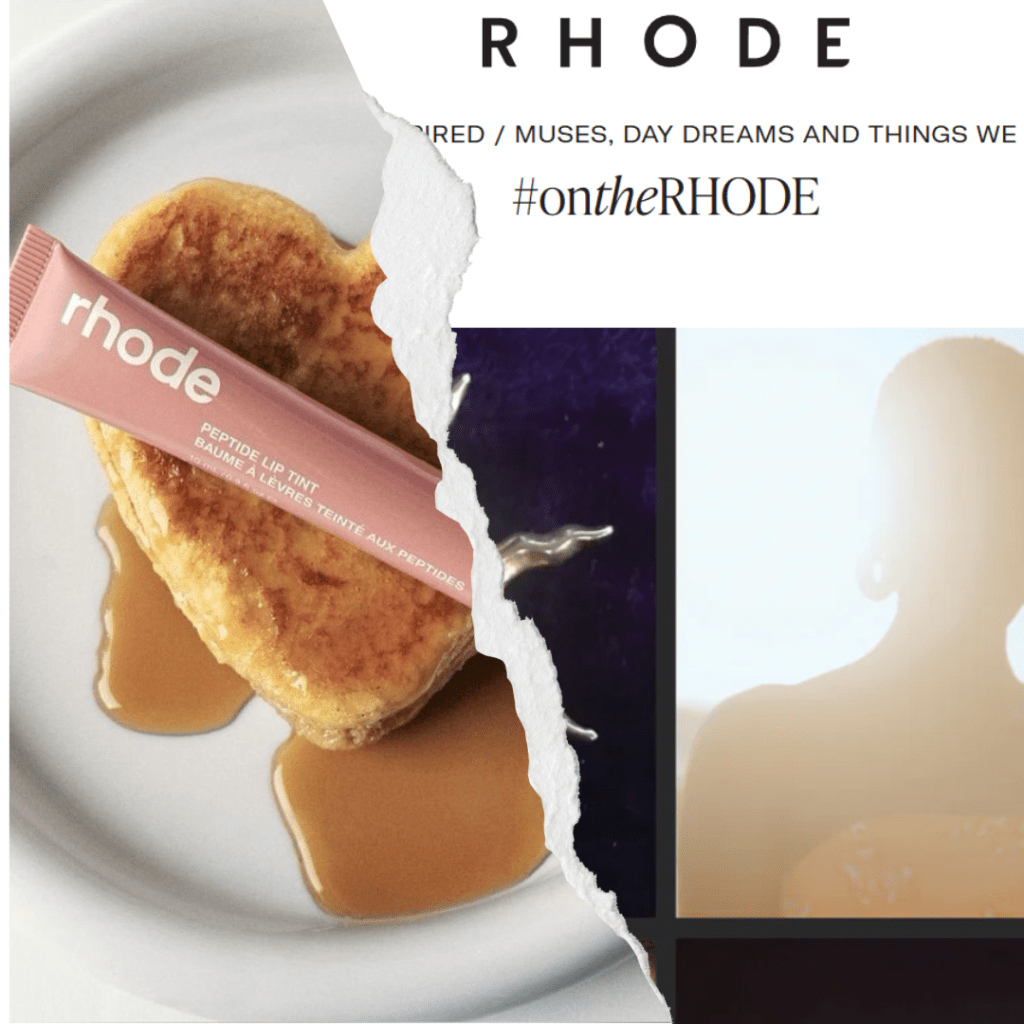
The involvement of the media regarding the trademark conflict between Hailey Bieber’s skincare brand Rhode and Rhode-NYC has provoked a lot of discussion among legal practitioners and business people. With the amount of attention this case has received, it goes without saying that the celebrity entrepreneurs have an uphill task in coming up with a distinct brand that withstands the ever-growing competition. Besides highlighting the tensions between creativity and the need to protect intellectual property, the scenario showcases the legal complications that accompany the start of new business where the name is already used by an existing business; these to some degree coexist and some overlap.
Background of the case
After Hailey’s skincare brand, Rhode, launched in June 2022, a legal battle quickly unfolded with the established fashion company, Rhode-NYC. The fashion brand, which has been around since 2014, filed a lawsuit accusing Bieber’s company of unfair competition and trademark infringement. Their primary argument was that the use of the name “Rhode” for Bieber’s skincare line could confuse consumers and damage the fashion brand’s hard-earned reputation and goodwill, which they had spent nearly a decade building.
According to Rhode-NYC, Bieber had previously attempted to purchase their trademark rights in 2018—a proposal the fashion brand had firmly declined. Despite this, Bieber proceeded to register the “Rhode” trademark for her skincare enterprise, a move that Rhode-NYC argued was a blatant encroachment on their established intellectual property. The fashion label further stressed that their brand identity had become widely recognizable and that they had imminent plans to expand into the beauty and personal care industry, exacerbating the potential for market overlap and intensifying the legal and commercial complexities of the dispute.
The Legislation at Issue
A large part of the pending dispute between Hailey Bieber’s skincare line, Rhode, and that of the fashion line Rhode-NYC are the central provisions of trademark law. In essence, trademark rights in the United States are governed chiefly by the Lanham Act which aims at preventing any confusion among consumers, preserving brand reputation, and ensuring integrity within the marketplace. Trademark infringement occurs when an entity uses a mark that is identical or confusingly similar to an already registered trademark, and creates a likelihood of confusion in the minds of consumers. Rhode-NYC contends that by the mere fact of using the name “Rhode” for her skincare line, Hailey Bieber-in-all-likely-hood will result in confusion among consumers regarding possible affiliation between the two brands and the “rights” of Rhode-NYC will noticeably be infringed .The “likelihood of expansion” principle is also important. Rhode-NYC’s allegation that they intend to enter the cosmetics business enhances their case, as courts frequently evaluate the potential overlap between the two brands’ marketplaces when determining the risk of misunderstanding.
Analysis of the Case
This case represents a microcosm of the growing difficulties in IP law, especially in an era when celebrity-backed firms routinely join crowded markets. At its root, the debate concerns whether fame can trump the legal protections granted to long-standing trademarks.
The complaint shares similarities with past high-profile intellectual property conflicts. For example, the struggle between Kylie Jenner’s Kylie Cosmetics and Kylie Minogue over the “Kylie” trademark raised similar concerns about consumer mishear and brand dilution. Ultimately, Minogue prevailed, as her prior use and established reputation were deemed superior.
In the Rhode case, Bieber’s celebrity status adds complexity. While her brand undoubtedly benefits from significant media attention and consumer reach, this visibility does not negate Rhode-NYC’s prior use of the trademark. The Courts have historically placed emphasis on first use and the distinctiveness of a mark over the influence of the infringing party.
Moreover, Rhode-NYC’s proactive refusal to sell their trademark rights to Bieber in 2018 bolsters their position. This pre-emptive rejection signals their intent to safeguard their brand identity, reinforcing their claim of ownership. Bieber’s decision to proceed with registering the “Rhode” trademark for her skincare line could potentially be interpreted as a deliberate disregard for these established boundaries.
The dispute also highlights the broader implications for industries where brand extensions are common. Fashion labels often broaden their offerings to include beauty and lifestyle products, leading to the creation of overlapping markets. This expansion significantly elevates the potential for trademark disputes to arise. Rhode-NYC’s stated intent to enter the beauty industry aligns with this trend, making the potential for confusion all the more plausible. In addition to the legal complexities already discussed, the Rhode vs. Rhode case also raises pertinent questions regarding the evolving nature of brand identity in an era of celebrity entrepreneurship. As social media platforms and influencers redefine consumer engagement, the significance of a personal brand has taken on a new dimension. In this context, the intersection between Hailey Bieber’s personal fame and her skincare brand’s identity complicates the case. While trademark law has traditionally emphasized the distinctiveness of a mark and its first use in commerce, the complexities of the modern marketplace often serve to blur these lines, making it more challenging to apply these principles in a clear-cut manner. Celebrities like Bieber have the ability to infuse their personal brand into the products they endorse or create, creating a unique intersection of identity, celebrity status, and intellectual property.
Verdict
In 2024, the parties involved reached a settlement that allowed both brands to coexist under specific conditions. Hailey Bieber agreed to modify her branding strategy in order to minimize consumer’s brand confusion. This decision involved making several adjustments, including significant changes to the packaging design and the marketing approaches employed for her products. This compromise not only preserved Rhode-NYC’s established brand identity but also enabled Bieber’s brand to continue operating without further legal hindrance. This resolution underscores the complexities of trademark law in a landscape increasingly dominated by celebrity brands. It highlights the necessity for new entrants in the market to navigate existing intellectual property rights carefully while leveraging their fame. By updating your blog to reflect this outcome, you will provide readers with a comprehensive view of the case’s implications for future trademark disputes, particularly those involving celebrity entrepreneurs.
Conclusion
The current legal struggle between Hailey Bieber’s skincare brand Rhode and the fashion label Rhode-NYC is a fresh example of the challenges of trademark law in the modern world, especially at a time when celebrity-backed businesses are increasingly popular on the international scene. While both sides maintain their positions, the conflict shows the balance between creation and the safeguarding of previous intellectual property rights.
While the Lanham Act provides a robust and well-established framework for resolving trademark disputes, its application in today’s modern and media–saturated marketplace increasingly requires nuanced interpretations. These interpretations must account for the evolving nature of branding, the rapid pace of technological advancements, and the shifting dynamics of consumer perception in an increasingly interconnected world.
Looking ahead, it is likely that this case will prompt deeper examination of the interplay between celebrity status, market recognition, and trademark law. Given the growing trend of influencers and celebrities venturing into entrepreneurial ventures, future litigation may seek to establish clearer precedents regarding the scope of protection afforded to personal brands and the potential for confusion in shared market spaces. Courts may also be called upon to refine the criteria by which the “likelihood of expansion” principle is applied, especially when one party, like Rhode-NYC, can credibly demonstrate plans to branch into new product categories, such as skincare.
In this context, the case is not just about the fate of the “Rhode” trademark but also about setting boundaries for the intersection of fame and intellectual property. As brands become more closely tied to their founders’ public personas, it is essential for both the legal and commercial sectors to adapt to the blurred lines of personal and professional identities within branding strategies.
References
- Lanham Act
- Rhode-NYC vs. Hailey Bieber’s Rhode Skincare
- Kylie Jenner vs. Kylie Minogue
- “Likelihood of Expansion” Doctrine
- Settlement Agreements
- Trademark Issues in Fashion and Beauty
 FASHION LAW
Leave a comment