
This article is authored by Kartika Barsainyan, a second-year B.Sc. LL.B. (Hons.) student at the National Law Institute University, Bhopal.
Can creativity go too far?
Artistic expression, in various forms, has become a significant part of modern culture, with individuals using it to communicate creativity and identity. One of the distinct ways used by artists, now-a-days, to express themselves is by altering commercially available products to create unique, personalized items. While many think of this as legitimate artistic freedom, the same often clashes with trademark owner’s rights on the product. Such trademarks are designed and registered to protect brand identity and prevent consumer confusion. Trademark owners argue that any alteration of their products, even if intended as art, could cause confusion among the consumers and even the slightest of the fluke might end up damaging the brand’s reputation.
The present article revolves around the fundamental question: whether alterations made to commercial products can be considered as artistic expression or mere trademark infringement that is meant to build upon the existing reputation of a brand. Where does the right to artistic freedom end and the violation of others’ intellectual property rights begin? In order to answer these questions, it is paramount to understand the real meaning of artistic expression.
What is Artistic Expression?
Expression is the act of conveying one’s thoughts, feelings, or ideas through speech, writing, or other methods, serving as a form of communication that asserts individuality. Artistic expression, as one of these methods, involves the creation of works using imagination and skill, often resulting in something beautiful or that communicates important ideas and emotions.
The concept of modern art re-imagines everyday objects, using them in innovative ways to challenge traditional artistic conventions and provoke new perspectives. By turning ordinary to the extraordinary, it encourages viewers to rethink the importance and beauty of familiar object. From everyday items like a chair or a bicycle to discarded objects or even food, modern art transforms everything and anything into thought-provoking pieces that challenge our perceptions of art in every possible way.
In Ai Weiwei’s words-
“Art is necessary for the human mind. Art is about our dreams, fears, and imagination. Art is about everything outside of the system. It is a death sentence for art when it is within the system.”
Art is essential for expressing the full range of human experience, including dreams, fears, and imagination. Art expression is most impactful when it is free from the bounds of societal norms or laws. Just as laws impose limits on human behavior, they can also restrict artistic freedom, making it fit into certain expectations. Art flourishes when it’s outside the system, able to explore new ideas, emotions, and imagination.
However, laws are essential in ensuring that art remains responsible and respectful. While freedom of expression is essential, it does come with reasonable limitations, especially when it impacts the rights of others. These restrictions are necessary to help balance creative freedom while the protecting individual rights.
Ai Weiwei’s words emphasize on the point of true creativity. It is undeniable that art thrives beyond rules and restrictions. However, when art overlaps with image of a brand, like by the way of customization, can it really stay ‘outside the system’? While artistic freedom is essential, it doesn’t automatically acquit artists from legal responsibilities.
The Current Scenario: Nike v. The Shoe Surgeon
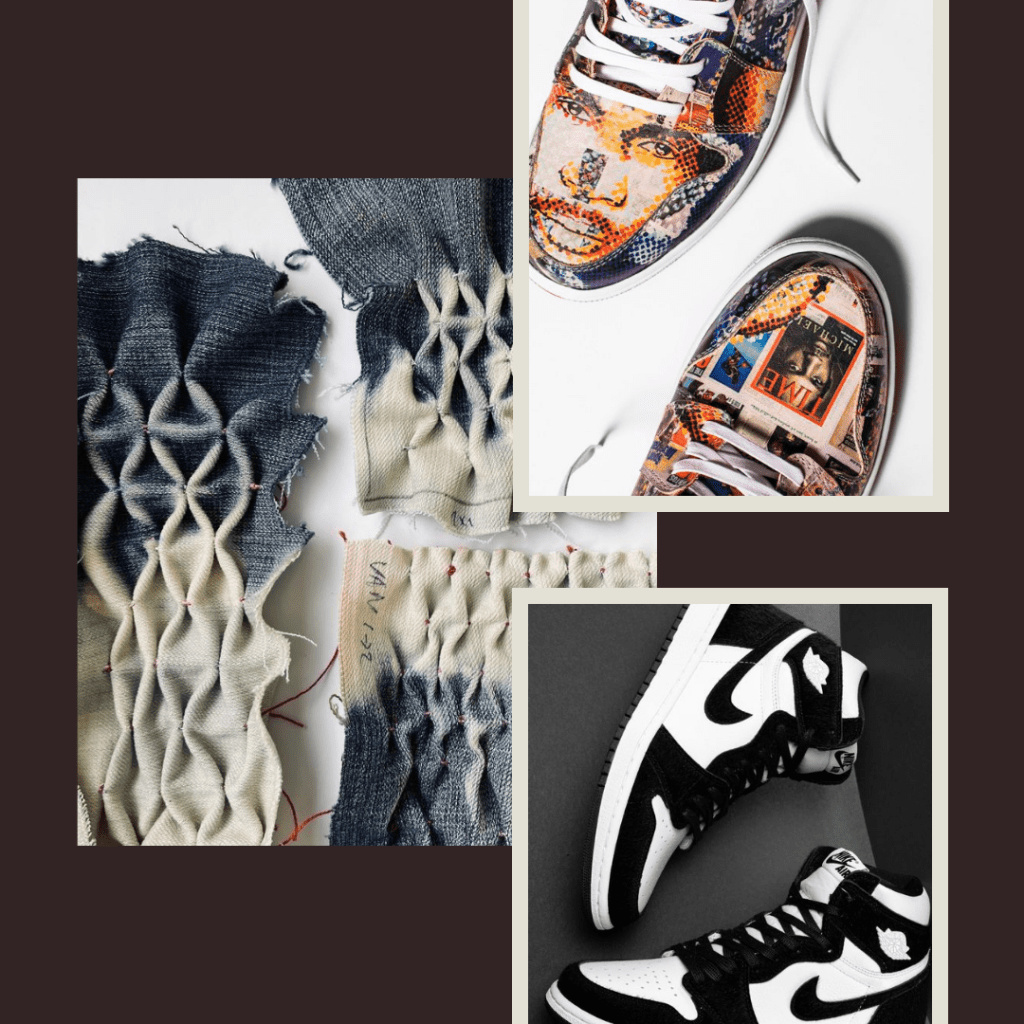
The ongoing conflict between Nike and the Shoe Surgeon has become a hot potato. This case serves as a prime example of how customization as art can challenge boundary between freedom of expression and right of others. The artistic customization of Nike sneakers has allegedly stepped over the line between creative expression and trademark rights.
In the concerned case, Nike took legal action against the Shoe Surgeon, suing the custom sneaker brand of trademark infringement by the way of making alterations to Nike sneakers. Nike further accused the Shoe Surgeon of counterfeiting, by mass producing deceptively similar sneakers as that of Nike, thereby causing confusion among the customer base and diluting brand’s identity. Moreover, Nike claimed that the Shoe Surgeon had been altering its footwear without authorization, and in some cases, even crafting entirely new designs using Nike’s logo.
The Shoe Surgeon, however, denied Nike’s claim. It insisted on not being not a mass producer, contending the counterfeiting claim to be unfair. Instead, it described itself as a creative studio that transforms genuine Nike sneakers into unique, handcrafted works. In its defense, the company argued that it provides a customization service rather than unauthorized replication staying within the ambit of its permissible bounds.
This case brings us back to the central issue- where does this boundary between trademark infringement and artistic expression lie? When does creative customization rise to the level of infringement?
Legal Boundaries Between Art & Infringement: The Indian Perspective
The Constitution of India guarantees freedom of speech and expression under Article 19(1)(a), which states that all citizens have the right to express their ideas and opinions freely. However, it is pertinent to note that this right is not absolute and is subject to reasonable restrictions as outlined in Article 19(2). One such ground arises when one person’s freedom starts intruding upon the rights of others. Customization, as an art can be considered a form of expression. However, if such customization is done to commercial products and infringes upon the trademark rights of others, its denial will fall within the reasonable restrictions on one’s right to express.
Further, Section 29 of the Trade Marks Act, 1999 deals with infringement of registered trademark. This provision of the Trade Marks Act protects marks from unauthorized use that could cause consumer confusion or damage to brand’s image and reputation. Customization that alters or reproduces trademark logos or designs without permission of the trademark owner is typically a violation of the rights held by him.
Indian courts have time and again prioritized brand protection over unrestricted customization. Louis Vuitton Malletier v. Haute24.com and Seagate Technology v. Daichi International are some of the prime and recent examples of such cases.
In the case of Louis Vuitton Malletier v. Haute24.com, the e-commerce site Haute24.com was selling counterfeit and modified Louis Vuitton products. Louis Vuitton initiated legal action against the e-commerce site. The Delhi High Court ruled in favor of Louis Vuitton, stating that the unauthorized customization and sale of trademarked products without proper authorization constituted infringement on the part of Haute24.com. The court emphasized that the reputation and goodwill of a brand must be protected against deceptive trade practices.
Similarly, in Seagate Technology LLC v. Daichi International, where Seagate Technologies LLC had sued Daichi International for refurbishing and re-branding its hard disk drives (HDDs) without permission. The Delhi High Court granted an ex-parte ad interim injunction, restraining the defendant from refurbishing Seagate’s end-of-life HDDs and selling them under the Daichi brand. The court concluded that such unauthorized modifications not only infringed Seagate’s trademark rights but also caused damage to consumers due to miscommunication about the products’ authenticity and quality, leading to a probable blow to the reputation of Seagate.
Courts have consistently rejected the idea that companies relying on the first-sale doctrine for customization. This doctrine limits the rights of intellectual property owners with respect to the resale of their products. It allows buyers to resell, lend, or rent a product without needing permission from the trademark owner. However, courts have prioritized brand protection, ruling that it should not mislead consumers or dilute brand identity.
That said, should all customization be considered unlawful? Not necessarily. The law should acknowledge the artistic value of certain personalization while ensuring they do not cause harm to the concerned brand’s image. It becomes essential to find a middle ground that keeps alive creative inspiration while protecting the interests of trademark owner.
Finding A Middle Ground
To balance artistic expression and trademark rights, a legal and ethical middle ground must be established. This can be achieved by way of disclaimers, concept of limited commercial use and brand collaborations.
Use of Disclaimers
The use of disclaimers can be an effective way to balance artistic expression with trademark protection, allowing artists to resell customized products while giving due credit to the original brand. A well-placed disclaimer would clearly state that the modified product is an independent artistic creation and not an official brand release, helping to prevent consumer confusion.
Limited Commercial Use Exceptions
To further avoid legal disputes, artists can adopt limited commercial use practices. When customized products are sold in small, limited quantities rather than mass-produced, they are less likely to be seen as direct competition or as exploiting the brand’s reputation. By limiting sales and highlighting their artistic purpose, artists can bolster their argument for creative freedom while reducing the chances of facing trademark infringement issues.
Additionally, fair use, a principle that allows limited use of trademarks for commentary, criticism, or artistic transformation, can protect artists if their modifications create entirely new meanings or messages.
Brand Collaborations
Brand collaborations happen when two or more companies join forces to create a product that is advantageous for everyone involved. This approach is one of the most effective and legally sound methods for artists to personalize branded products. Companies and artists can collaborate to produce artistic customizations, resulting in an officially approved design. Through brand collaboration, a fair and ethical balance can be struck between creative expression and trademark protection.
Conclusion
Art is a fundamental part of expression. It allows individuals to push boundaries, challenge norms, and create something meaningful. However, when creativity meets commercialization, the perspective shifts from pure artistic freedom to legal responsibilities.
Trademark laws exist to protect brand identity and consumer trust, and they cannot simply be disregarded in the name of art. However, this in no way means that artistic expression should be completely silenced. Finding the right balance between the two is crucial.
In my view, the focus should be on intent and impact. If a customization transforms a product into a unique work of art instead of trying to take advantage of a brand’s reputation, it should be allowed. However, if the changes mislead consumers, dilutes the brand’s identity, or unfairly benefits to customizer, then it becomes a clear case of infringement.
For what it’s worth, neither artistic freedom nor trademark protection can operate in isolation in today’s world. They must coexist in a way that respects both the creator’s vision and the brand’s rights.
Creativity has no limits but law does.
 FASHION LAW
Leave a comment