
This article is authored by Nupur Trivedi, a second year B.A. LL.B. (Hon’s) student at the Gujarat National Law University, Gandhinagar.
Nupur interned with the Fashion Law IP Blog during the month of July-August, and this article submission forms part of the tasks assigned to her during the internship period.
Abstract:
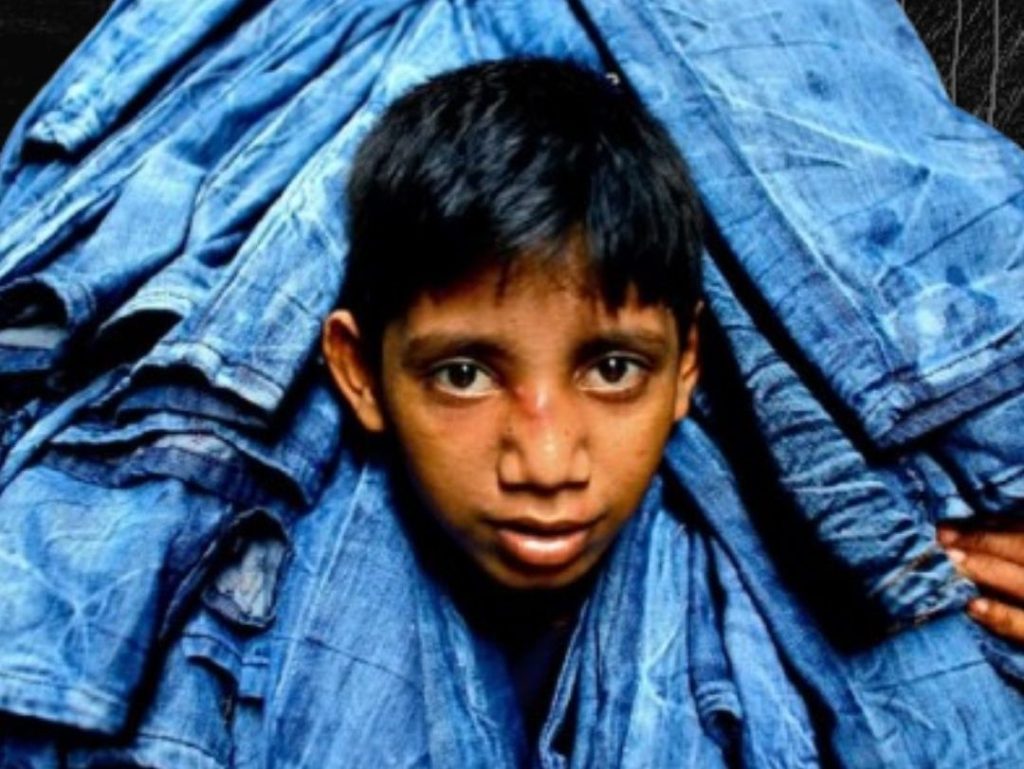
In December 2023, US Customs and Border Protection issued a Withhold Release Order against a major Indian textile manufacturer, blocking millions of dollars’ worth of cotton garments from entering American markets. The reason? The production process involved a significantly striking amount of child labour. Section 307 of the Tariff Act of 1930 prohibits the importation of goods produced, mined, or manufactured in foreign countries using forced labour, including convict, forced, or indentured labour.
The supply chain production process includes a complex, inter territorial process. Each stage of production may take place across different regions, countries and continents, hence affecting the regulatory framework. These multi-jurisdictional supply chains lead to regulatory fragmentation.
In recent years, there has been a shifting legal approach in the fashion industry. Traditionally, brands weren’t held responsible for the actions of their suppliers, hence not needing to care about humanitarian or environmental laws.
But the current laws impose a stricter liability on brands, holding them accountable on humanitarian grounds. This shift is based on the recognition that the fashion industry plays a vital role in global contractual relationships, and is a leading stakeholder in the potential exploitation of environmental and humanitarian laws.
THE LEGAL LANDSCAPE: KEY FRAMEWORKS
This multi-jurisdictional nature of fashion law exposes It to a variety of legal frameworks. These help in regulating the fashion industry, often customs which the fashion industry must adhere to.
International Foundation: ILO Conventions
The International Labour Organization’s Convention 138 (Minimum Age Convention, 1973) and Convention 182 (Worst Forms of Child Labour Convention, 1999) form the bedrock of global child labor law. Convention 138 establishes 14 as the general minimum working age, with exceptions allowing 12-13 years for light work that doesn’t harm health or education. Convention 182 identifies “worst forms” including hazardous work, forced labor, and work that harms children’s health or development – categories that frequently intersect with textile manufacturing processes.
These conventions create binding obligations for the 187 countries that have ratified them, including all major fashion manufacturing and consuming nations. Crucially, they establish the principle of “progressive elimination” of child labor, requiring states to implement time-bound measures rather than merely prohibiting the practice.
Regional Enforcement: EU Corporate Sustainability Due Diligence Directive
The European Union’s Corporate Sustainability Due Diligence Directive (CSDDD), effective from 2024, represents the most comprehensive regional approach to supply chain accountability. The directive mandates that companies with over 500 employees and €150 million in turnover conduct human rights due diligence throughout their value chains. For fashion companies, this means legal obligations to identify, prevent, and remediate child labor risks across their global operations.
The CSDDD’s extraterritorial reach is significant – it applies to non-EU companies operating in European markets, effectively globalizing European standards. Non-compliance can result in fines up to 5% of global turnover, making it a crucial consideration for fashion brands worldwide.
National Legislation
Constitutional Foundation: Article 24 of the Indian Constitution prohibits employment of children under 14 in factories and hazardous occupations, while Article 21A guarantees free and compulsory education for children aged 6-14.
The Child Labour (Prohibition and Regulation) Act, 1986: This foundational legislation, amended in 2016, completely prohibits child labor under 14 and restricts adolescent work (14-18 years) in hazardous processes. The 2016 amendments expanded the definition of “hazardous occupations” and introduced stricter penalties, including imprisonment up to two years.
Factories Act, 1948: Specific to manufacturing, this act prohibits employment of children under 14 and regulates working conditions for adolescents. It requires health and safety measures particularly relevant to textile manufacturing, including provisions for dangerous machinery and chemical exposure.
Juvenile Justice (Care and Protection of Children) Act, 2015: This act treats child labor as a form of abuse, mandating rehabilitation rather than punishment for child victims. It establishes Child Welfare Committees with authority to remove children from exploitative situations and prosecute employers.
SUPPLY CHAIN LEGAL LIABILITY: WHERE FASHION LAW GETS COMPLEX
Direct vs. Indirect Liability
Direct liability occurs when fashion companies can be held responsible for child labor abuses. This mainly happens in three situations: wholly-owned subsidiaries, joint ventures with operational control, and direct contracts where the company dictates production methods that involve child labor.
The landmark case Doe v. Nestlé USA (2021) sets important precedents for direct liability in international supply chains. While it deals with cocoa rather than textiles, the Supreme Court’s ruling that foreign actions alone cannot create liability under the Alien Tort Statute has prompted fashion lawyers to focus on domestic connections, such as decisions made at US headquarters that directly lead to foreign child labor.
Indirect Liability is the more challenging and dynamic subsector of fashion law. It involves instances where companies are held accountable for acts of independent sub-contractors, sub-sub-contractors, or even independent suppliers in their extended supply chains. The legal theory behind indirect liability is based on notions of control, foreseeability, and the ability of the company to stop harm.The EU’s Corporate Sustainability Due Diligence Directive exemplifies this trend, explicitly extending liability to “business relationships” throughout the value chain. Under the CSDDD, fashion companies cannot escape responsibility by claiming ignorance of supplier practices if they failed to conduct adequate due diligence. This creates a legal obligation to know and act upon supply chain conditions.
Due Diligence Requirements: The New Standard of Care
Modern fashion law articulates due diligence not as a voluntary best practice but as mandatory law with clear standards of care. The UN Guiding Principles on Business and Human Rights, although non-binding law, have been enacted in domestic legislation worldwide to create enforceable due diligence obligations.
Risk Assessment Requirements: Companies must carry out detailed risk assessments to identify possible child labor violations in their supply chains. This involves mapping the supplier network beyond direct contractors, examining risks at the country level, and identifying vulnerabilities at the product level. The legal standard is “reasonable efforts” to identify risks, with courts increasingly defining this standard based on industry best practices and available technology.
Monitoring and Verification: Fashion companies are required to monitor and verify child labor standards with mechanisms in place to confirm compliance. Some of them include regular audits, interviews, and document verification. Most importantly, the law requires companies to address audit restrictions – such as planned visits or language constraints – that may conceal abuse. The legal requirement is not merely to conduct audits but to make them effective.
ENFORCEMENT REALITY & LEGAL GAPS
The Subcontracting Loophole Current law focuses on direct supplier relationships. It often overlooks the complex subcontracting chains that are common in modern fashion production. Brands can put in a lot of effort with major suppliers while being legally shielded from violations by unauthorized subcontractors. This forms perverse incentives in which suppliers are remunerated for preserving plausible deniability regarding their own supply chains.
The EU’s Corporate Sustainability Due Diligence Directive aims to fill this void by adding liability to “business relationships,” but enforcement is uncertain. Initial interpretations indicate that companies are required to do due diligence on relationships they “know or should know” of, providing a knowledge-based standard that can be skirted and evaded by sophisticated companies through intentional ignorance.
Small and Medium Enterprise (SME) Blind Spot The majority of fashion law targets big multinational brands while creating limited responsibilities for smaller firms that together account for major shares of global production. SMEs are often under-resourced to undertake full due diligence programs, which leaves enforcement gaps in parts of the industry employing millions of workers.
CONCLUSION: THE FUTURE OF FASHION LAW ENFORCEMENT
The evolution of fashion law indicates a shift from reactive rules to proactive corporate responsibility. Traditional enforcement methods have a hard time keeping pace with global supply chains. As a result, the legal framework is changing. Companies are taking on roles like regulators and facing more liability for failures in oversight.
Preventing child labor will depend more on strong legal frameworks. These frameworks will require companies to do their homework, use technology for monitoring, and take responsibility in the market. Legal professionals must navigate this complicated environment while supporting systems that protect vulnerable workers in global supply chains.
Endnotes:
- Tariff Act of 1930, 19 USC § 1307.
- ILO Convention concerning Minimum Age for Admission to Employment (adopted 26 June 1973, entered into force 19 June 1976) 1015 UNTS 297 (ILO Convention 138).
- ILO Convention concerning the Prohibition and Immediate Action for the Elimination of the Worst Forms of Child Labour (adopted 17 June 1999, entered into force 19 November 2000) 2133 UNTS 161 (ILO Convention 182).
- Directive (EU) 2024/1760 of the European Parliament and of the Council of 13 June 2024 on Corporate Sustainability Due Diligence and amending Directive (EU) 2019/1937 [2024] OJ L 2024/1760.
- Constitution of India 1950, art 24.
- Constitution of India 1950, art 21A.
 FASHION LAW
Leave a comment