
This article is authored by Shruti Udayan, a second-year B.A.LL.B. (Hon’s) student at the National Law University, Jodhpur.
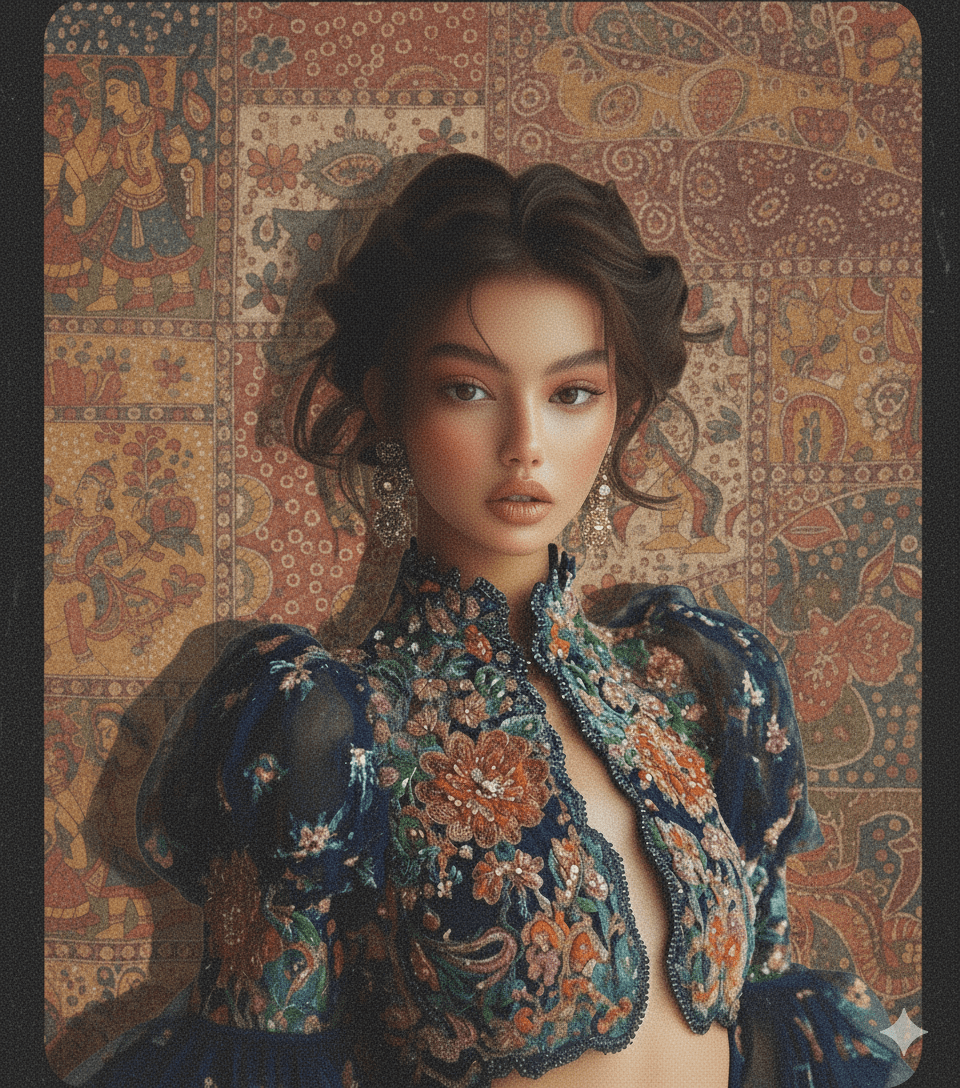
In the era of AI-created fashion, where virtual models produce unique garments in the blink of an eye, one question stands out more than ever: Who truly possesses design? As luxury brands adopt generative artificial intelligence (AI) to speed up innovation, the distinction between creativity and cultural appropriation becomes ambiguous especially when inspiration comes from traditional handloom designs and textile art maintained by communities for generations.
India’s handloom industry, a treasure trove of complex designs, methods and narratives, is becoming more susceptible to unnoticed digital piracy. Generative AI, developed using extensive datasets gathered from the internet which include pictures of traditional textiles can reproduce, modify and reassemble these designs into “original” works, frequently without acknowledgment, permission or advantages for the source communities. The outcome is a legal void in which the creative efforts of artisans remain unrecognized and unprotected, as global fashion brands profit from heritage using advanced technology.
The Rise of Generative AI in Fashion
Generative AI tools such as DALL·E, Midjourney and Stability AI are transforming the fashion industry by allowing immediate generation of design mock-ups, digital fashion product creation, and mood boards. They’ve gained knowledge from billions of pictures and can produce highly realistic images that imitate distinct art movements and cultural styles, Indian ikat, Bandhani, Madhubani, Kalamkari, or even tribal pattern textiles. Luxury fashion brands have welcomed the technology enthusiastically. In 2023, Gucci launched a campaign driven by AI showcasing visuals inspired by textiles. Balenciaga and Prada have been exploring AI-created visuals, often referencing a vast domain of international art legacy.
The problem? AI models are developed using datasets harvested from the internet without any filters or consent mechanisms. Public images of crafts by cooperatives or NGOs that are uploaded or shared unintentionally serve as training data for the AI. When generative AI produces these motifs in a “novel” form, the original creator is entirely left out of the financial and legal process.
IP Law and Its Limitations: The Loophole That Enables Appropriation
Modern intellectual property (IP) systems are not designed to safeguard traditional designs, particularly in instances of AI replication.
Copyright Law: While Indian copyright law does provide protection for artistic works, traditional designs on textiles often fail to meet the criteria of individual authorship and originality. Moreover, copyright protection lasts for the life of the author plus 60 years. Traditional patterns passed down over centuries typically lie outside this protection.
Design Law: The Designs Act of 2000 provides protection for industrial designs for a duration of 10-15 years. However, this applies only to newly registered designs, neglecting traditional handloom designs, which are typically unregistered and owned by the community.
Trademark law: Trademarks and certification marks (like those used by Khadi or GI-tagged items) offer protection, but do not cover visual elements used inappropriately or reimagined through AI.
Geographical Indications (GI): GI safeguardslocal artistry (Banarasi sarees, Kanjeevaram silk) but lacks authority over the unauthorized replication or digital reinterpretation of designs by international designers or software. GI law globally also lacks weak enforcement mechanisms.
The Black Box of AI Datasets: Who’s Accountable?
A significant oversight of the law is the lack of transparency regarding the data used for AI training. They are usually collected discreetly, making it impossible to determine if a specific motif replicated by an AI tool came from a Banarasi textile or a Pinterest page. In Andersen v. Stability AI (2023), a number of artists filed a lawsuit in the U.S. for copyright violation against prominentAI image creators for reproducing their work without permission. Although this lawsuit was filed by individual artists, it poses an interesting question for crafts: If single artists can sue for infringement, why can’t collectives of artisans or groups of craftspeople?
Regrettably, indigenous communities typically lack documentation or formal ownership of their creations, complicating their ability to assert legal rights under existing IP frameworks. A similarly noticeable lack of legal requirements exists to enforce attribution or royalties for community owned expressions that AI replicates.
Sui Generis Protection: The Need for a New Legal Category
The most promising yet unused legal remedies are sui generis (Latin, “of its own type”) protection mechanisms. Panama and Peru have implemented laws that acknowledge traditional knowledge and cultural expressions as unique categories deserving of separate legal protection.
India has also made initial progress in this area. The National IPR Policy 2016 acknowledged the importance of safeguarding traditional knowledge and cultural heritage, yet tangible legislative action remains a distant aspiration. The suggested Traditional Knowledge Digital Library (TKDL) and comparable registries are most effective in documenting community-owned designs as unenforceable intellectual property rights. In the era of generative AI, passive recording alone will be insufficient. Communities require active legal rights for control, licensing and revenue generation.
The Ethical Divide: Innovation vs. Appropriation
The absence of legal frameworks is paired with a distressing void in ethics. While AI is hailed as a catalyst for change, it appears to perpetuate the very inequalities that the fashion industry claims to eliminate. When a high-end fashion label releases an AI-generated clothing collection featuring designs that closely resemble Gond or Pattachitra art, it receives accolades for its “global fusion” and “technology-enhanced creativity.” The original creators whose visual language is utilized to produce these designs remain unseen and uncompensated. The fashion industry’s fixation on “artisanal aesthetics” never truly leads to fair trade, licensing, or acknowledgment practices. AI is merely deepening that divide. Lacking ethical guidance and enforceable regulations, AI becomes an instrument of digital imperialism.
Contemporary Legal Developments & Policy Proposals
Several recent legal developments suggest that the issue is gaining visibility:
- European Parliament’s AI Act (2024) includes a clause requiring dataset transparency, which could help trace whether AI models are using copyrighted or traditional material.
- WIPO’s Intergovernmental Committee (IGC) is currently negotiating a new international legal instrument to protect traditional knowledge and traditional cultural expressions.
- India’s Draft Digital India Act (2023), while not focused on IPR, calls for ethical AI principles that may be expanded to cover cultural misappropriation in future amendments.
Yet, none of these frameworks currently offer clear, enforceable protection for traditional Indian crafts in the AI-driven fashion ecosystem.
The Way Forward: A Rights-Based Approach
To address this emerging challenge, India and other nations with a rich cultural legacy must respond quickly. Here are several practical recommendations:
- Create a Sui Generis Law: Create a distinct legal framework to safeguard traditional designs, incorporating community ownership, moral rights, and benefit-sharing elements.
- Required Dataset Disclosure: Obligate AI developers to disclose the sources of datasets, especially in creative fields like fashion and design.
- Fair Use Guidelines for AI: Establish clear parameters for acceptable use of historical designs in AI-generated content, grounded in ethical fair-trade principles.
Attribution and Licensing Frameworks: Develop registration and licensing frameworks for traditional designs to enable cooperatives and artisans to gain advantages from their cultural characteristics in the digital economy. Global Collaboration: Propose an international agreement at WIPO that recognizes the unauthorized use of indigenous designs in the digital realm as a violation of cultural rights.
Conclusion: Reclaiming Cultural Sovereignty in the Digital Age
In a realm where AI intertwines inspiration with imitation, we need to confront challenging inquiries regarding ownership, consent, and fairness. Traditional designs are not in the public domain; they represent the intellectual legacy of communities that have protected them through generations of dedication and care. As AI-created fashion strides down the runways of Paris and Milan, it should not overshadow the craftsmanship of Varanasi and Kanchipuram.
Safeguarding traditional designs transcends intellectual property; it concerns cultural respect and economic fairness. In the era of generative AI, it’s essential for the law to keep pace.
 FASHION LAW
Leave a comment