
This article is authored by Rhea Mary Philip, a third year B.A. LL.B. (Hon’s) student at the Maharaja Sayajirao University of Baroda.
THE FRAGILE DANCE OF CREATIVITY AND COPYING
The fashion world is a paradox; it is a fast-paced business built on slow and meticulous craft. Fashion designers around the world, both in Paris and India, work tirelessly for months to create beautiful pieces. Designers pour their hearts into creations that tell stories of culture, heritage, and innovation but such hard work often comes at great expense in terms of human and natural resources. The shadow of imitation looms large. There are dozens of knockoffs available in the offline market, on e-commerce websites, or even on social media shops that often get sold at a fraction of the price. For a long time, particularly within the Indian context, IP laws have remained overlaid on top of the fashion industry, creating a sense of helplessness for designers whose works suffer from unauthorized duplication and leaving designers vulnerable. Recently the Indian designer Rahul Mishra finally uploaded a post that started the revolution. The iconic hand-embroidered pattern of a tigress on a model’s couture garment that featured on the ramp in Paris became the subject matter of a ground-breaking Delhi High Court ruling. The case was not just hailed as a precedent case for Indian fashion law but set a precedent for the entire fashion industry when the verdict finally came out to be in favor of the designer, making an attempt to send a strong message to the mainstream: the creativity-deserving protection will get it. And this is the story of how the Rahul Mishra’s tiger roared inside and outside the courtroom.
THE BIRTH OF THE TIGRESS: A SYMBOL OF ART AND HERITAGE
Each Rahul Mishra collection is like a love letter to the world, beautifully stitched together. Mishra, a champion of planet-first “slow fashion,” speaks the language of Indian artisanship with the fluency of high-end couture, ensuring each design resonates on the international runway. His 2023 collection We – The People was a celebrated highlight of Paris Haute Couture Week, with odes to nature and artisanship weaving their way through elaborate pieces. The standout? A breathtaking hand-embroidered Tigress motif inspired by the Sunderbans, India’s mangrove-rich delta where the Royal Bengal Tiger reigns. The Tigress wasn’t just a design; it was a cultural emblem. Each stitch, crafted by skilled artisans over countless hours, symbolized ecological fragility and India’s rich textile heritage.
Its global spotlight moment came in 2024 when Mark Zuckerberg wore a Mishra shirt featuring the motif at Anant Ambani and Radhika Merchant’s pre-wedding celebrations in Jamnagar. Social media erupted, establishing the Tigress as a couture icon. It soon became the favourite couture sensation. Print took over the runway and celebrity wardrobes. But fame invites imitation. Just weeks after the phenomenon reached its peak, knockoffs were everywhere from delhi boutiques, Instagram stores, and marketplaces such as Amazon, Flipkart, and more.[i]
THE EMOTIONAL TOLL OF COPYING
In interviews, Rahul Mishra has emphasized the human toll of plagiarism in fashion. Behind every embroidered tigress, dozens of hours of work had been shed by the hand of a highly-skilled artisan, 69people whose livelihood depends on being credited for their craft. To have their work reduced to soulless, machine-made knockoffs was a betrayal both of creativity and of culture more broadly. Mishra isn’t the only one who is feeling this frustration. Skirting the law has been a common problem in fashion, for designers large and small. Where Mishra’s case stands out is because he decided to push back, in the media and in the halls of justice.
THE LEGAL ROAR: BREAKING DOWN DELHI HIGH COURT’S LANDMARK JUDGMENT
Fashion designer Rahul Mishra had moved to the Delhi High Court seeking action against several companies for unauthorized reproduction, marketing and sale of his Tigress embroidery. The Court was not one to take that lying down, and slit out a restraining order on the infringing parties.
What makes this case historic is the Court’s acknowledgement now of this larger reality. It declared that Mishra’s Tigress was not only ornament but art which deserves to be protected as copyright under Section 2(c), Copyright Act, 1957.[ii]
Importantly, the Court stated:
“Whenever a designer goes to court over plagiarism, this order will be referred to.”
This line, reported by the Times of India (Feb 2025), cements the case as a binding precedent in future plagiarism disputes involving fashion design.[iii]
FASHION AND IP: WHY THIS CASE MATTERS?
Fashion law has always had its fair share of grey areas. There is an irregular pattern of legal protection for designers worldwide. As far as trademarks are concerned, logo and brand name protection is absolute and in the case of design patents, only ornamental shape protection is accepted. However, regarding motifs, embroidery and especially silhouettes, the position has traditionally been held much weaker. These are, after all, the most critical ingredients that give meaning to the term ‘creative expression in fashion.’ Generally speaking, they tend to slip away from the net of intellectual property regimes.
However, the decision of the Delhi High Court in this particular case copying the tigress design fills that gap, at least within the Indian context. The Court has issued a landmark ruling by forbidding businesses from reproducing such Tigress embroidery this way: motifs and embroideries are copyrightable. It may be so obvious, but it bears recognition that such a motif does not amount simply to “ornamentation” but to “artwork,” which has transformational potential in the part of the economy that relies heavily on artisanal and craft-based innovation.[iv]
This creates a jurisprudential sea change. One category of creative work that had long existed in a state of legal ambiguity is now subject to protection: fashion IP is not confined to logos and labels. India thus positioned itself on the cusp of rethinking fashion IP with anticipated ripple effects throughout the industry.
GLOBAL COMPARISON
Globally, fashion IP battles like Louboutin v. YSL, Burberry v. Target, and Bottega Veneta’s Intrecciato show how courts struggle to balance protecting creativity without granting monopolies over aesthetics. Many fast fashion giants thrive in this “knockoff economy,” making almost identical copies, with slight changes that keep them from being considered infringing. Unlike literature or music, fashion often has no automatic protection, which makes designers highly vulnerable. The Rahul Mishra Tigress case reverses this narrative in India by considering embroidery and motifs copyrightable works.[v]
CULTURAL STAKES: CONSUMER AWARENESS AND THE ROLE OF BUYERS
This case has something imperative dimensions to be deduced associated with increasing consumer consciousness. Often enough, consumers do not buy fashion dupes after considering the implications involved. The fast-fashion brands and e-commerce platforms take advantage of this thin line, from “inspired” to “stolen,” and pass off knockoffs under the tag of “affordable alternatives.”
The case of Rahul Mishra, then, is an example of the invisible costs behind all this. Each cheap copy brings down the original designer and further lessens the value of artisanal labour. By setting embroidery as artwork, the Court reminded the consumer that every motif tells a story, and by choosing authenticity, they keep creativity and livelihoods afloat.
To paraphrase, as once the famous fashion law scholar Susan Scafidi stated that creative designers deserve legal protection just like authors, musicians, and filmmakers. It is often held that “Without intellectual property, fashion is naked.” Indeed, this reinforces the fact that intellectual property is not some abstract legal category but the very spine that shields creative industries from collapse. For the consumers, this would mean a complete reassessment of the temptation that dupes provide and a realization that authenticity is what sustains the cultural and creative core of the industry.[vi]
FUTURE IMPLICATIONS FOR FASHION LAW IN INDIA
The Tigress ruling cannot be overstated, it set a judicial precedent that will guide Indian fashion and future cases of plagiarism, giving designers much firmer grounds to obtain injunctions. It further mandates that designers put better contracts in place with manufacturers and distributors, thereby addressing the supply chain leak that creates the basis for knockoffs. Such an award increasingly paves the way for more motif registrations that would add to India’s IP registry in the area of fashion and crafts. More importantly, it also strengthens arguments around the protection of traditional cultural expressions and allows artisan networks to challenge local and international exploitation of their indigenous designs. In other words, it could, in the longer term, lead to institutional reform, where councils, industry bodies, and law firms will raise the levels of knowledge and support around IP much higher, thus preparing the ground for an even more robust fashion law ecosystem in India.
CONCLUSION: A TIGRESS THAT CHANGED THE GAME
In Indian mythology, the tiger is a symbol of power, guardianship, and resilience. Rahul Mishra’s Tigress lived up to that symbolism, not only guarding his artistic integrity but also protecting the broader landscape of Indian fashion IP. The Delhi High Court’s ruling is more than a personal victory. It is a milestone that empowers designers, validates artisans, and nudges Indian jurisprudence closer to the complexities of global fashion law.
In the jungle of fashion where fast-fashion predators roam unchecked, Mishra’s Tigress roared and, for once, the law roared back.
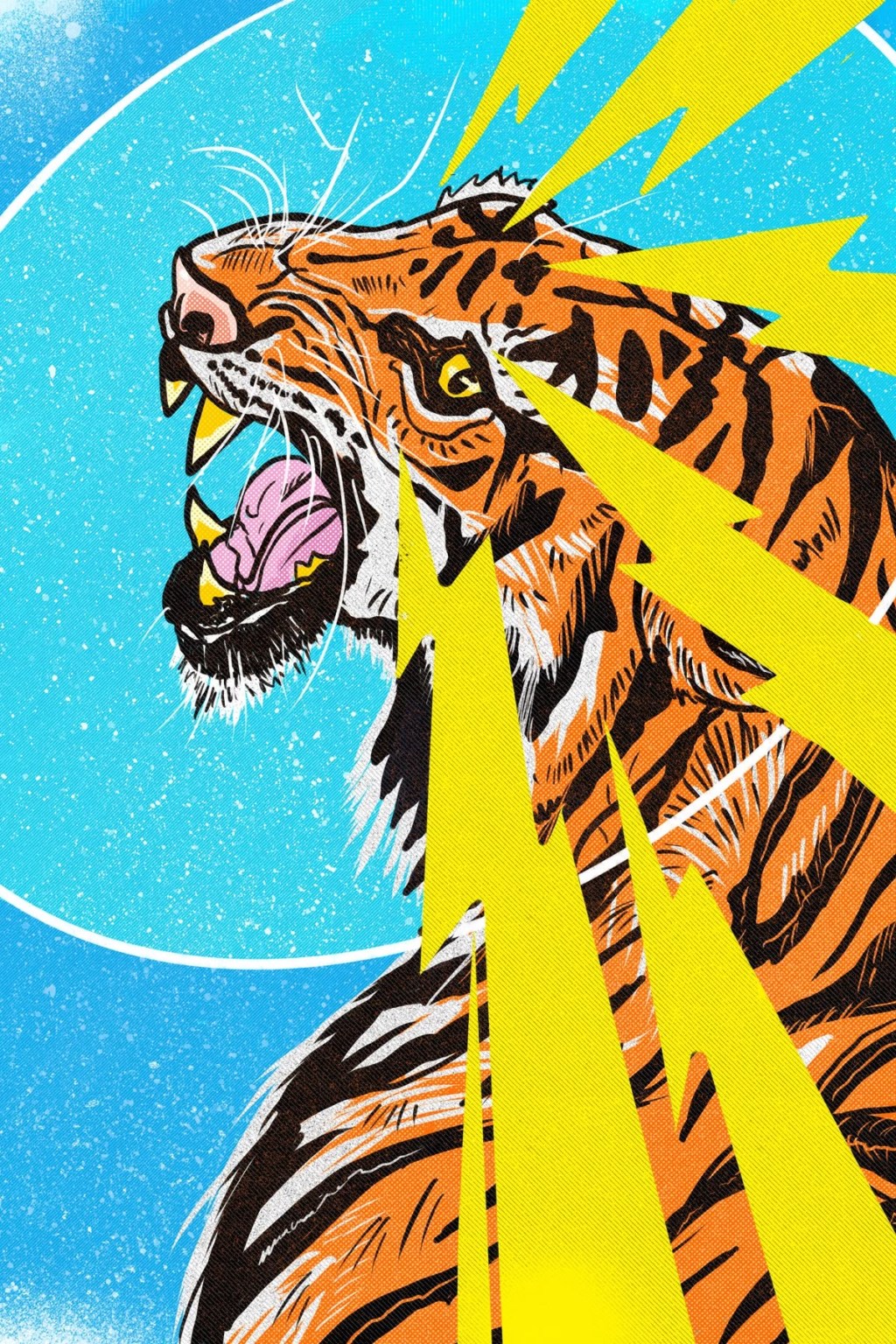
Background image © : http://www.behance.net via Pinterest
Endnotes:
[i] Mark Zuckerberg and Wife Priscilla Chan Match During Anant Ambani’s Pre-Wedding Celebration,” Yahoo Entertainment, March 3, 2024, https://www.yahoo.com/entertainment/mark-zuckerberg-wife-priscilla-chan-153816559.html
[ii] Fashion designer Rahul Mishra triumphs in infringement suit as Delhi High Court issues dynamic injunction,” World Trademark Review, February 20, 2025, https://www.worldtrademarkreview.com/article/fashion-designer-rahul-mishra-triumphs-in-infringement-suit-delhi-high-court-issues-dynamic-injunction
[iii] Whenever a designer goes to court over plagiarism, this order Read more at:
http://timesofindia.indiatimes.com/articleshow/123424428.cms?utm_source=contentofinterest&utm_medium=text&utm_campaign=cppst
[iv] Delhi High Court Passes John Doe Order To Protect Trademark, Artistic Works Of Fashion Designer Rahul Mishra,” LiveLaw, January 12, 2025, https://www.livelaw.in/high-court/delhi-high-court/delhi-high-court-passes-john-doe-order-to-protect-trademark-artistic-works-of-fashion-designer-rahul-mishra-279843
[v] THE LOUBOUTIN V. YSL RED SOLE DISPUTE: FASHION, LAW, AND THE LIMITS OF TRADEMARK PROTECTION, https://www.lawpointuganda.com/post/the-louboutin-v-ysl-red-sole-dispute-fashion-law-and-the-limits-of-trademark-protection
[vi] Fashion, IPR & The Emerging Designer https://papers.ssrn.com/sol3/papers.cfm?abstract_id=2635087#:~:text=The%20plight%20of%20the%20emerging%20designer&text=fashion%20houses%20depend%20heavily%20on,the%20copying%20of%20their%20designs.&text=According%20to%20Professor%20Scafidi%2C%20it’s,It%20is%20a%20common%20story.
 FASHION LAW
Leave a comment