
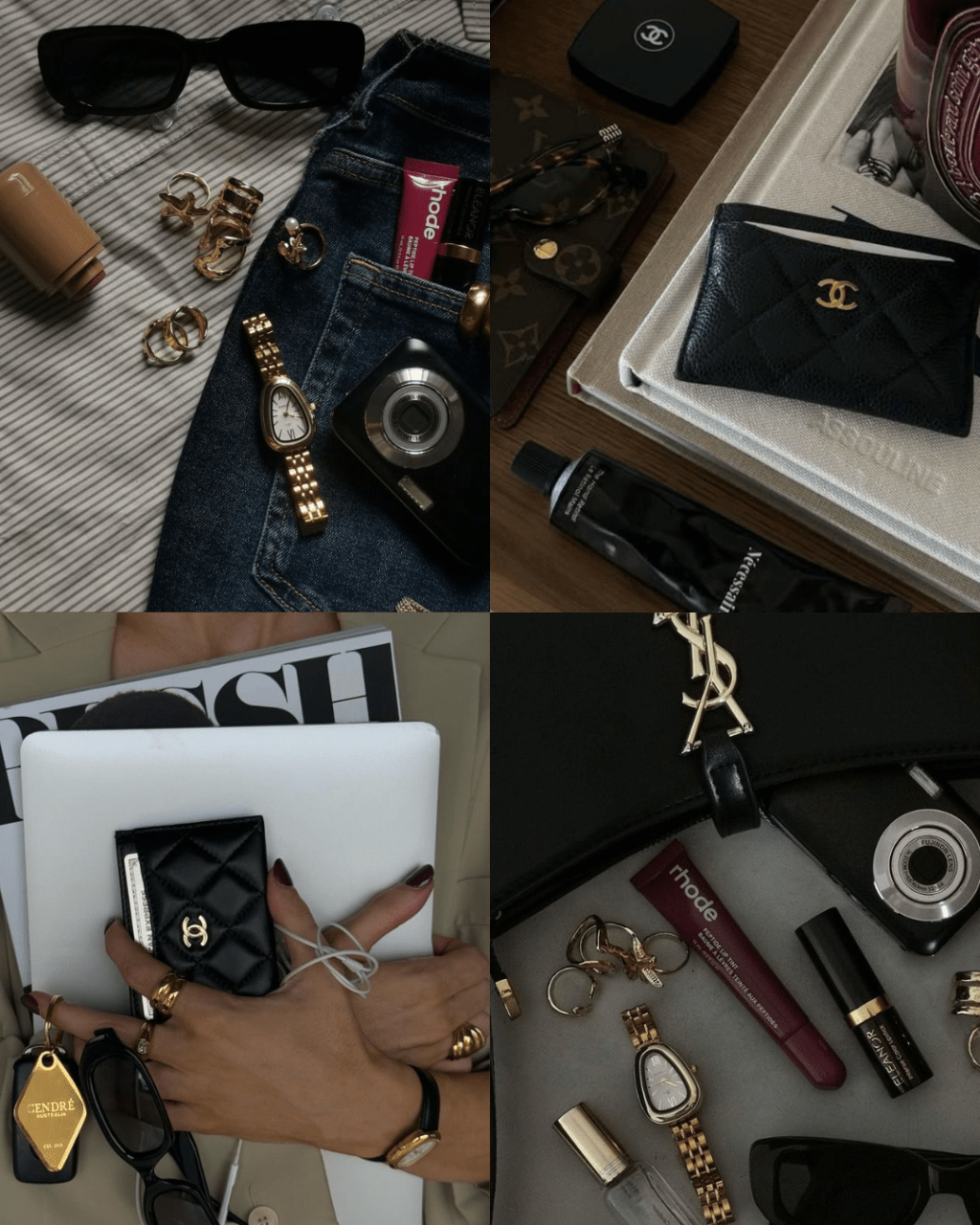
This article is co-authored by Divija Manaktala, second year B.A. LL.B. (Hon’s), and Sankalp Mirani, fifth year, B.A. LL.B. (Hon’s) at the Maharashtra National Law University, Mumbai.
Introduction
Aesthetics can be immaterial, yet they have a huge power on the contemporary creative economy. Design, graphics, color schemes and typography and graphic textures all solve to create a visual identity of a brand. During the 21st century, consumers usually pursue the aspirational lifestyle that comes with a product rather than with the product and, therefore, these visual components are of paramount importance in defining brand value. This visual lingo is not just the source of interest, but commerce, which poses a significant legal query: can an artist or a brand claim a legal claim of an aesthetic wholesome?
The answer is nuanced. Although there are exact aspects of protection, the general area of look and feel is in legal greyness. Copyright defends against definite forms of expression, logos, graphical designs, and original prints. But the cloudy aesthetics of a brand can, as a rule, be possessed non-monopolically. Since the visual qualities of a brand can result in emotional reactions to trigger impulse purchasing, the time to take the initiative is strongly in favor of a proactive legal strategy that goes beyond this grey area.
The Difference Principle: The Idea-Expressions Dichotomy
Copyright jurisprudence relies on the Idea-Expression Dichotomy. This is based on the fact that the copyright law prohibits only the particular material expression of an idea and not the idea itself. As an example, a writer can protect the text of a novel by copyright, but cannot protect the plot of a star-crossed romance. Equally, an artist has copyright over a given canvas and cannot make the Impressionist style belong to him/her.
The Supreme Court in R.G. Anand v. Delux Films (1978) in the Indian context. This doctrine was summarized by Delux Films (1978), which believed that nothing can be copyrighted as an idea, subject matter, themes, plots, or historical/legendary facts. In such cases, the violation of the copyright is limited to the shape, mode, and structure and articulation of the notion by the writer of the copyrighted work.
This doctrine is a challenge to aesthetics. A visual identity, by definition is a set of ideas, aesthetic decisions and themes. To enable one thing to have a monopoly on such a notion as the idea of minimalism or cottage core would kill the competition and go against the rationale of the copyright law, which is not to suppress but encourage the proliferation of creativity.
Copyright Protection: Protection of the Tangible Assets
The overall impression is a matter of the common domain, but the actual, original works that form this overall impression are heavily guarded. Under Section 13 of the Copyright Act 1957, original works of authorship are safeguarded as long as they are fixed in a tangible form. The physical aspects of an aesthetic that can be provided protection are:
- Photographic and Cinematographic Works: The individualized photographs and video campaigns are individual copyrighted work.
- Graphic and Pictorial Designs: The original logos, drawings, and typography designed can be safeguarded as artistic works.
- Literary Works: Copyright applies to Website copy, brand narratives and descriptions captions.
- Original Patterns and Prints: Two-dimensional art, including floral patterns on cloth or wall papers, is obviously a copyright.
The lynchpin is originality. According to the norm established in Eastern Book Company v. D.B. Modak (2008), the work should demonstrate a minimum of skill and judgment in order to qualify protection. Infringement is done when a particular work is notably copied not when a competitor uses a similar palette or composition structure.
Intersection of Art and Industry: The Separability and Microfibres Test
The conflict between utility and aesthetics is the least obvious in other spheres, such as fashion and industrial design. In the U.S., the Supreme Court dealt with this in the case of Star Athletica, L.L.C. v. Varsity Brands, Inc. (2017) where it set out the so-called separability test, which permits the protection of features which can be perceived as art but not as part of the useful article.
This is regulated in India however, by the interaction between the Copyright Act and the Designs Act namely Section 15(2) of the Copyright Act, 1957. This was further made clear in the landmark judgment of Microfibres Inc. v. Girdhar and Co. (2006) of the Delhi High Court. The Court ruled that where an artistic work (such as a pattern) can be registered as a design and applied to an article by an industrial process over 50 times, the copyright in such work does not exist.
This poses a special difficulty of maintaining the aesthetic of a brand. This is in contrast to the U.S. system of separability, which imposes on creators the choice between the longer-term protection of copyright (when dealing with pure art), and the shorter-term, statutory protection of Indian industrial design (when dealing with applied art). Brands should therefore take care, as in case their aesthetic is based on the patterns placed on mass-produced textiles, failure to be registered according to the Designs act may put them in danger once the 50-piece mark is exceeded.
Beyond Copyright: Trade Dress Positioning
To have comprehensive coverage of the visual image of a brand, designers have to resort to the trade dress law, which is a branch of trademark protection. The trade dress protects the visual image of a product or its wrapping that indicates the origin of the product to the consumers.
The definition of a mark under the Trade Marks Act, 1999, Section 2(zb) is general enough to incorporate the shape of goods, packaging or combination of colours. To be treated as a trade dress, an aesthetic must be:
- Unique: It should be unique and in fact it has gained secondary meaning which implies that the consumers would automatically relate the look to a particular origin.
- Non-functional: The design elements should be decorative, and should not be necessary to use the product.
Recognition of Judicial in India
The Indian judges have been more active on this front. The Christian Louboutin SAS v. Pawan Kumar (2018) case is the most renowned one. The Delhi High Court ruled the Red Sole to be a famous trademark, as it is admitted that a certain color location can be used as a source identifier. Equally, in the recent case of the Protection of the trade dress of Shaadi.com against a look-alike site, the court ensured the protection of the trade dress of Shaadi.com against a similar look and feel site, which included color scheme and font, as they amounted to a protectable asset (People Interactive (India) Pvt. Ltd. v. Jerry, 2024).
The Colour Conundrum
Although single colors are more difficult to defend (as was the case in Colgate red and Cadbury purple litigation), companies that are over combinations that create a recognizable brand are becoming increasingly acknowledged. In this example, the unique red of Zomato or the pink of Nykaa, paired with the corresponding structure and font, is a powerful trade dress that makes them stand out in the digital market.
Another Extravagance: Industrial Designs
The third line of defence is the registration under the Designs Act, 2000 which is the Industrial design registration. Unlike a patent which safeguards the functionality, a design safeguards the characteristics of form, arrangement, pattern, decoration or composition of the lines or colours on any article (Section 2(d)).
This plays an important role in brands whose appeal is dependent on the physical appearance of their goods, i.e. the shape of a handbag or the curve of a smart device. Nevertheless, the criteria are quite rigorous: the design should be new or original, and also not published before. Delhi High Court, in Crocs Inc. v. Bata India Ltd (2019), refused to grant an injunction to Crocs since their design was published before registration. This underscores the need to protect the aesthetic by filing prior to launching the aesthetic in the market.
Conclusion: An Interdisciplinary Strategy
In conclusion, it is important to note that an abstract aesthetic cannot be copyrighted, but a misconception about the invulnerability of the visual identity of a brand is a misconception. One statement regarding a “style” will not be enough, but instead a multi-layered intellectual property strategy is needed by the brands.
This landscape is evolving. The most recent development that indicates a shift towards the protection of digital aesthetics is the consultations held by the Department for Promotion of Industry and Internal Trade (DPIIT) with respect to the protection of Graphical User Interfaces (GUIs) under the Designs Act.
The creators have to apply an interdisciplinary approach: ensuring that they receive a copyright on the physical creation (literary and artistic works), they develop an image that is distinct to develop a trade dress right which can be enforced under the Trademark law, and they use design registrations on the shape of their new product. The intellectual property toolset is a powerful defense that can be developed by creators by using the full range of intellectual property tools to ensure their creative capital is not easily diluted.
 FASHION LAW
Leave a comment