
This article is authored by Mandasmitha J, an LLM graduate from Christ University, Assistant Professor of Law at Mount Shepherd Law College, Bangalore.
INTRODUCTION:
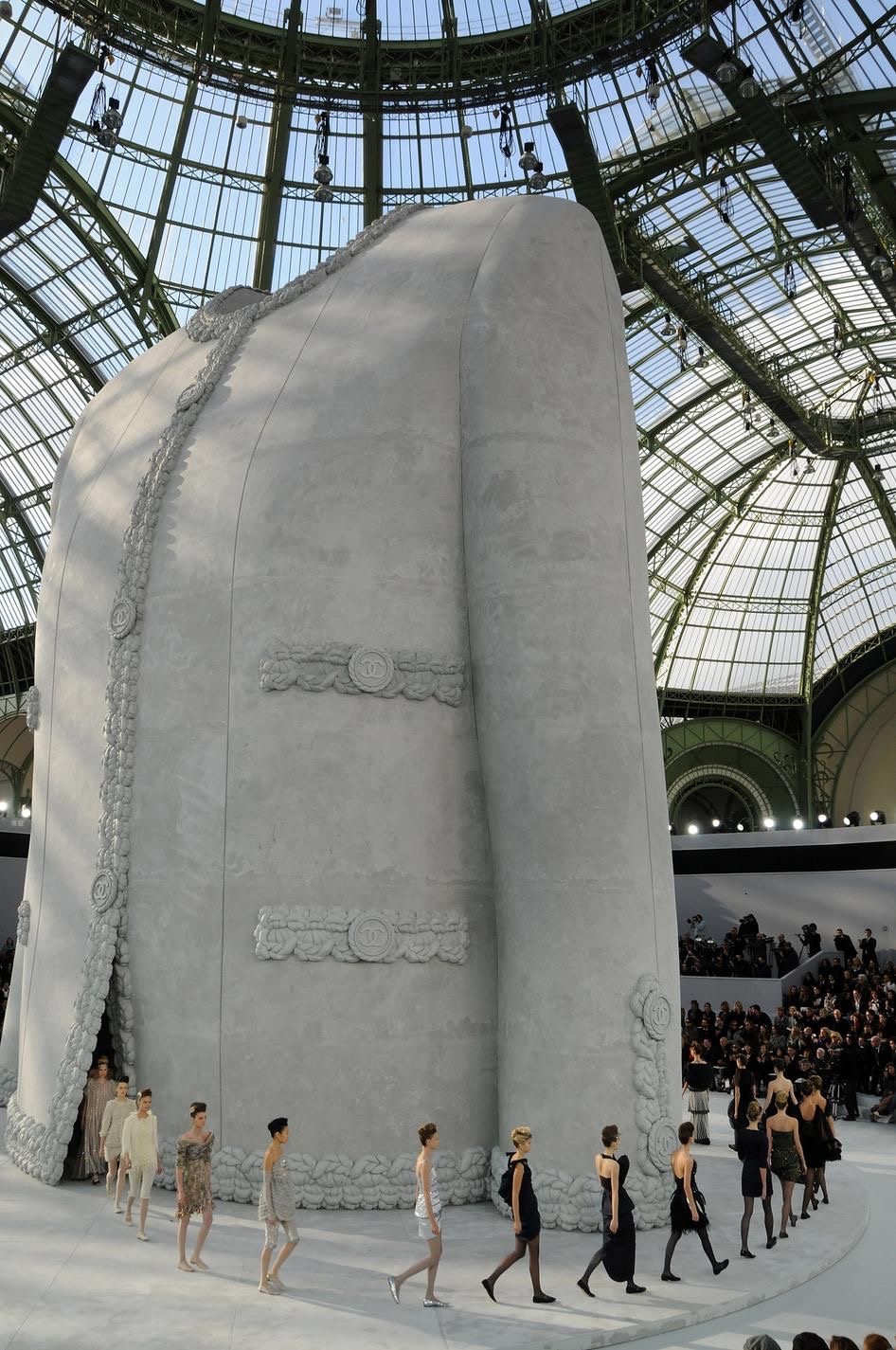
Fashion shows have evolved into multidimensional spectacles. Such a situation raises questions about their eligibility for copyright protection. Fashion designers and fashion invest substantial creative effort to execute shows that have unique themes and perspectives. It is not just about models strutting anymore, fashion shows are elaborate, live and provide a near theatrical experience to the audience. The clothes, makeup, lighting, choreography, scenic arrangement are expressed in a different manner in each show. Despite judicial recognition in jurisdictions like France (Ashby v. Gaulme)[i], ambiguities persist regarding the threshold of originality required for copyrightability.
A fashion show is a collaborative work of many people resulting into one main event. Fashion shows have an element of ‘drama’ in them in today’s scenario. It is also performed in front of a live audience and also live streamed. But the question is whether a fashion show can fall within the subject matter of copyright protection.
For a work to be copyrighted it needs to be an original expression of an idea. But the Supreme Court of France has held that fashion shows are copyrightable[ii]. The Intellectual Property Code[iii] in France has a non- exhaustive list for copyrightability. Whereas India and the U.K. follow a closed approach. The France Supreme Court stated that fashion shows are eligible for protection because of their unique scenic arrangements[iv]. The expression differs from show to show. This raises questions about the threshold for originality.
FASHION SHOWS AND COPYRIGHTABILITY:
FRANCE:
France is the only country where the court has recognised that fashion houses can sue for copyright infringement of fashion shows. In the case of Ashby vs Gaulme[v], photographers had posted some images and videos of the fashion show on an online website. The photographers took the defense that they were published for informational purposes. The court rejected the argument by stating that, there was no immediate need to share such information. The court held that fashion houses had the exclusive right to control the publication of images and the show itself. Therefore, it amounted to copyright infringement.[vi]
Let us analyse how the court has recognized fashion shows as eligible for copyright protection under Article L 112- 1 and L 112 -2 of the Intellectual Property Code. Article L 112-1, states that copyright protection is granted to all works of the mind, whatever kind, form of expression, merit or purpose. Article L 112-2, gives a non-exhaustive list of works that are eligible for copyright protection. If you read both the provisions together, they can be interpreted very broadly. That is, any works of the mind which has an original expression will be granted protection. The originality requirement in France is not that high. Fixation is not a necessary requirement unlike India and the U.K. Fashion articles are protected under Article L 112-2, but fashion shows are not explicitly mentioned. But dramatic, dramatic-musical works and choreographic works are mentioned[vii].
The court in the case of Ashby vs Gaulme, Cass., crim., 5 février 2008, observed that fashion shows are eligible for protection because the unique arrangements, live music, the display of the clothes are all considered “works of the mind” as per Article L112-1. The French court also in Roberts A. D. et al. v Chanel et al[viii], Cour de cassation, Civ. 1ᵉʳ, 5 février 2008 held that fashion shows are a form of choreographic works and are capable of copyright protection. This is possible because French law provides for a non-exhaustive list of works and the threshold for originality is low. The only requirement is that the work has to be a result of application of mind by the author and the work may be in any form of expression.
INDIA:
Unlike France, India follows a closed copyright law system. That is, for a work to be protected it has to fall into the subject matter of protection. In India, “dramatic works” are defined as “any piece of recitation, choreographic work or entertainment in dumb show, where the scenic arrangement or acting form is fixed in writing or otherwise.[ix]It includes choreographic works. According to French jurisprudence this is enough for copyright protection. But in India, for a work to be recognized as a “dramatic work” the originality threshold is higher than mere ‘works of the mind’. In India, we apply the test of skill and judgement. This test was applied in the case of Eastern Book Company vs D.B. Modak[x],AIR 2008 SC 809,where the court laid down the requirements of “originality” under section 13 of the Copyright Act, 1957 are that,
- The work originated from the author.
- The work is the result of application of independent skill, labour and capital by the author.
- The work has not been copied from some other work.
A fashion show involves various components like designs of the clothes, set design, music, lighting. The work should be a result of independent application of skill, labour and capital by the author, but in these shows the final event is not the independent creation of the author. Lastly, the work should not be copied from others. The functioning of the event is the same, which cannot be copyrighted. In the case of Baker v. Sheldon[xi], 101 U.S. 99 (1879), the court held that “any method that is functional, is a system or a process cannot be copyrightable.”
IDEA AND EXPRESSION:
In some cases, idea and expression are merged. That is there will be only one way to express a particular idea. In such cases, copyright over the expression creates a monopoly over the idea. The way a fashion show works all over the world is the same except the music and other elements used which are usually owned by another creator. In Herbert Rosenthal Jewellery v. Kalpakian[xii], 446 F.2d 738 (1971), the court held that there was no other alternative way to make the bejewelled pins in shape of a bee that would not render it similar. It was held that there is no other way to express the uncopyrightable idea. Therefore, granting a copyright to a fashion show creates a monopoly over the idea. Similarly, some ideas cannot be expressed without use of certain elements or form of expression[xiii]. In the case of Anil Gupta & Ors v. Kunal Dasgupta[xiv],AIR 2002 Delhi 379, the plaintiff claimed copyright for the concept of “Swayamvar” a TV reality show as literary work. He held the copyright over the concept note. The court in this case held that the concept developed by the plaintiff is a result of the work done by the plaintiff upon the information already available in the public domain but it resulted in a unique result applying the concept. On an appeal, the Delhi high court held that “an idea perse cannot be copyrighted but if the idea is developed into a concept fledged with adequate details, the same is eligible for protection under the Copyright Act[xv]. As far as fashion shows are concerned, there is a chosen theme for some shows. But the theme is further developed into an expression only in the form of the clothes designed by the fashion designer. Only the sketches of the designs can be granted copyright protection as artistic works as section 2 (c) of the Copyright Act, 1957 includes a drawing. Therefore, the adequate details into which an idea is developed subsists only in the clothes in case of a fashion show. The court also in the case of R.G. Anand v. Deluxe Films[xvi],AIR 1978 SC 1613, held that there can be no infringement in an idea, subject matter, themes, plots or historical facts. Therefore, we can say that fashion show based on a theme, cannot be copyrighted as themes are ideas. As pointed out by the merger doctrine, granting copyright protection to such themes will result in a monopoly.[xvii]
FIXATION REQUIREMENT:
Another issue is the requirement for the work to manifest in a tangible form. For a fashion show to be granted protection, fixation is a major requirement. In R.G. Anand v. Deluxe Films, AIR 1978 SC 1613, the court pointed out that, “there cannot be any copyright in mere scenic effects or stage situations which are not reduced to some permanent form”. Therefore, fashion shows can be said to be fixed if they are recorded in a video form. The work should exist in a physical or a digital form without it being merely an idea or a live performance. This position is also supported by the Indian Copyright Act, 1957 under section 2(h), which states that for a dramatic work to be granted protection, it has to be written down or reduced to some permanent form. These shows are live and unrecorded performances unless recorded but the recording of the video or the live stream should be reduced to some permanent form. The clothing designs are considered functional, that is they are considered ‘useful articles’ and not copyrighted unless they have a separate artistic element. But a design of a dress fixed in the form of a sketch, might be protected. Another aspect is the choreography of the show, it requires fixation through notation or a recording. Many fashion shows do not document the choreography and also the choreography of a fashion show might not satisfy the originality threshold required. Therefore, live fashion shows face the challenge of fixation because they are too transient in nature.
CONCLUSION:
India’s legal system makes it difficult to protect fashion shows as copyrightable works mainly because of its strict categories for what can be copyrighted. High standards for originality, and the requirement that works be fixed in a tangible form. In contrast to France, which has a more flexible approach to intellectual property. India’s Copyright Act of 1957 specifies that works must fit into specific categories and must show “independent skill, labour, and judgment” to qualify for protection. Fashion shows, being collaborative and temporary events, struggle to meet these requirements for a few reasons. Indian law states that work must be captured in a physical medium, such as a video recording. While live-streamed shows could qualify if recorded, many runway events focus on the moment rather than documentation. Even when they are recorded, the fixation must include the full scope of the creative work (like choreography and lighting), which is often not documented adequately. Without proper fixation, fashion shows are treated as unprotected “live performances.” The nature of fashion shows makes it hard to for it to be protected as a singular work. Moreover, the originality requirement excludes common elements like seating arrangements, which are functional or not original. Ideas and themes are not protected under the merger doctrine. While clothing designs can qualify as artistic if drawn, they often fall under the Designs Act of 2000, leaving aspects like choreography or staging without protection. This legal overlap adds confusion and forces designers to seek fragmented protections. Therefore, there is a lack of judicial interpretation specifically addressing fashion shows in India which creates further uncertainty.
Endnotes:
[i] Ashby v. Gaulme Kenzo Lacroix, Cass., crim., 5 février 2008.
[ii] Id.
[iii] Law No 92-597 of 1 July 1992.
[iv] Id at 2.
[v] Cass., crim., 5 février 2008.
[vi] Id.
[vii] Law No 92-597 of 1 July 1992.
[viii] 442 F.3d 772 (9th Cir. 2007)
[ix] Section 2 (h) of the Copyright Act, 1957.
[x] AIR 2008 SC 809.
[xi] 101 U.S. 99 (1879)
[xii] 446 F.2d 738
[xiii] Herbert Rosenthal Jewellery v. Kalpakian, https://law.justia.com/cases/federal/appellate-courts/F2/509/64/222704/
[xiv] AIR 2002 Delhi 379
[xv]Anil Gupta & Ors v. Kunal Dasgupta, https://www.bananaip.com/ideas-concepts-scripts-stories-protecting-ideas-entertainment-industry-part-v
[xvi] AIR 1978 SC 1613.
[xvii] Kushi Agarwal, R.G Anand Vs M/S. Delux Films & Ors, 1978 Air 1613: Applicability In The Present Time, Vol Issue 1, 2021.
 FASHION LAW
Leave a comment