
Issued by Antabikhya Gogoi, Research Head, Fashion Law IP Blog.
1. Met Gala 2026 Revives Debate on Cultural Appropriation and Artisan Rights
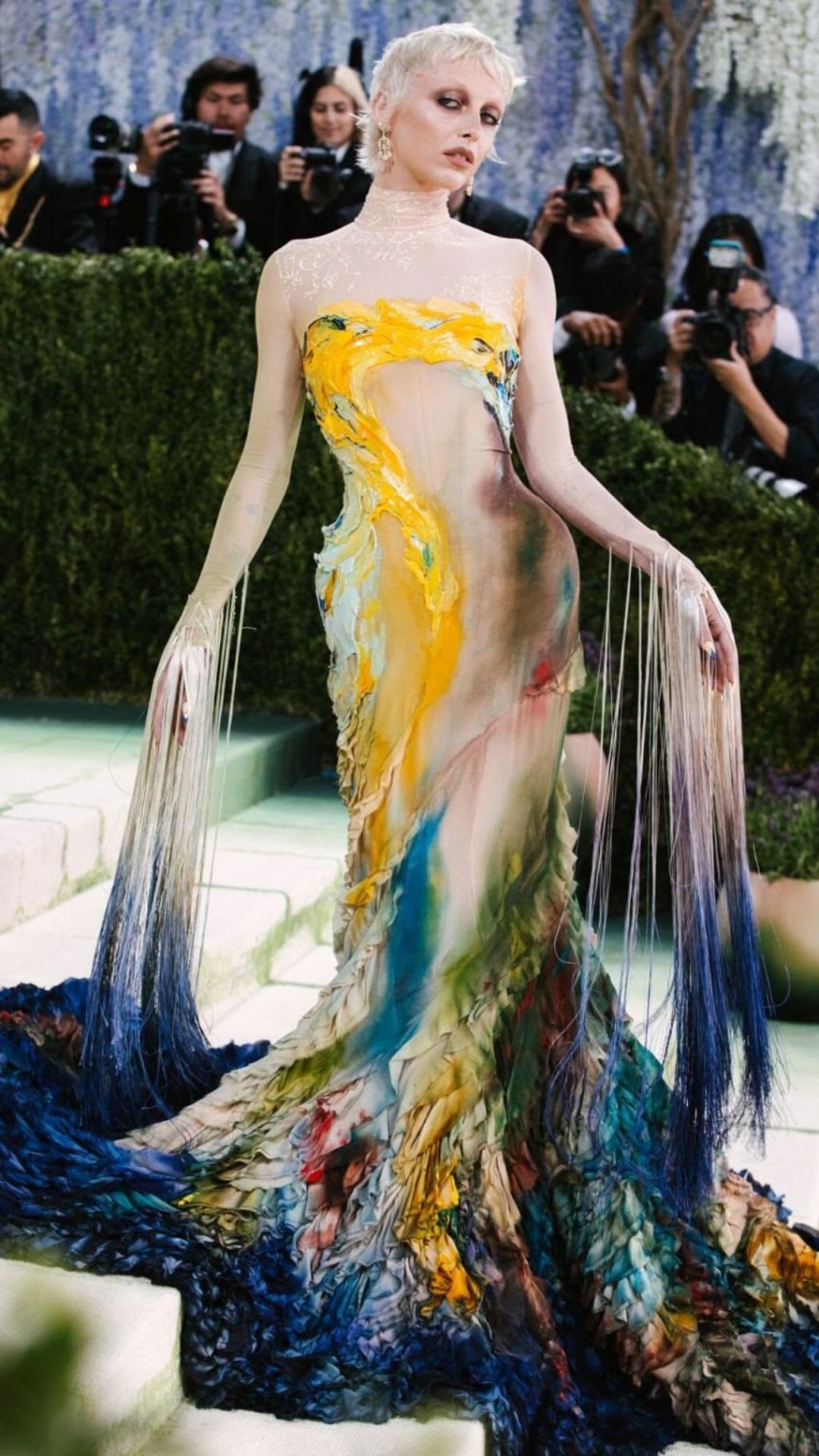
The 2026 Met Gala, held on May 4 under the theme “Costume Art” with a “Fashion is Art” dress code, invited attendees to treat their bodies as blank canvases, producing extravagant ensembles that erased the line between garment and fine art, yet in doing so, it also renewed long-standing debates about cultural appropriation and the rights of artisans whose traditions are co-opted by high fashion. Beyond individual celebrity choices, the Gala’s broader institutional framing drew equally pointed scrutiny. Critics noted the uncomfortable optics of a global craft celebration underwritten by Jeff Bezos, whose marketplace is widely associated with rapid replication and scale-driven distribution; raising questions about whether commerce and cultural stewardship can coexist without tension. Observers pointed out that the 2023 tribute to Karl Lagerfeld had already illustrated fashion’s ingrained habit of treating cultural languages as ornament rather than meaning, when Qur’anic verses were printed onto Chanel garments after reportedly being mistaken for a Taj Mahal love poem. The 2026 edition thus crystallised a deeper structural problem, whether fashion’s most visible institution can align its rhetoric about global artistry with the economic systems that underpin it, and whether the stories of labour, authorship, and shared value will be treated as central to fashion’s history rather than peripheral to its spectacle. This debate carries particular significance, as existing frameworks of copyright, geographical indications, and traditional cultural expression protections remain inadequate to safeguard the rights of artisan communities whose techniques and motifs are routinely absorbed by the luxury industry without credit, compensation, or consent.
2. The Anti-Met Gala: For a Sustainable Planet and Fair Working Conditions
While couture descended the museum steps on the evening of May 4, 2026, a sharply different kind of spectacle unfolded on Little West 12th Street. Activists organised a broad demonstration outside the star-studded event, citing concerns over Amazon’s labour practices, worker exploitation, tax avoidance, and alleged complicity in Israeli military actions in Gaza, directing their anger specifically at Jeff Bezos and Lauren Sánchez Bezos, who served as lead sponsors of both the Gala and the Costume Institute’s “Costume Art” exhibition. The Amazon Labor Union held a parallel worker-led counter-event titled A Ball Without Billionaires, declaring that “while Jeff Bezos plays host to elite spaces like the Met Gala, Amazon workers are still fighting for basic safety, dignity, and a union contract.” Protesters gathered with placards reading “billionaires for a dead planet” and “tax the rich,” framing the Gala not as a celebration of fashion and art but as a monument to the very economic structures that fashion’s most marginalised workers like artisans, garment workers, and union organisers continue to struggle against. For fashion law observers, the protests carry a pointed institutional irony as a Gala nominally celebrating the global artistry of costume was bankrolled by the founder of a platform widely criticised for undermining the very conditions of fair wages, safe workplaces, and collective bargaining.
3.Lawsuit between Saint Crewe and Bubble Beauty
Is Trade dress distinctive and capable of being protected under trademarks? The recently filed case of 1135 Skincare, LLC v. Bubble Beauty, Inc. brings into sharp focus the contested question of whether the aesthetic language of modern skincare packaging can constitute protectable trade dress under trademark law. Recently, Bubble Beauty sent multiple cease-and-desist letters to Saint Crew demanding a nationwide product recall and revenue accounting. At the heart of the dispute lies a fundamental tension in trade dress doctrine, while Bubble asserts rights in the overall visual appearance of its skincare packaging which includes brightly coloured containers, contrasting caps, rounded bottle and jar shapes, and pared-back branding; Saint Crewe argues that these elements are too inconsistent and too reflective of broader skincare design conventions to warrant exclusive protection, pointing to significant variation in Bubble’s colours, shapes, and product presentations across its lineup. This contention speaks directly to the doctrinal requirements for trade dress protection, which demand that the asserted elements be distinctive and have acquired secondary meaning. In contemporary beauty markets shaped by TikTok aesthetics, Sephora shelf placement, and algorithmic discovery, pastel colour-blocking, minimalist typography, and rounded pharmaceutical-inspired packaging have become so widely adopted that they arguably function as category signifiers rather than source identifiers, making exclusive trade dress claims extraordinarily difficult to sustain. The case thus illustrates that while trade dress is indeed capable of protection under trademark law when it is sufficiently distinctive and non-functional, the threshold becomes markedly harder to meet in aesthetics-driven industries where the very visual elements claimed as proprietary have been absorbed into the shared grammar of an entire market.
 FASHION LAW
Leave a comment