
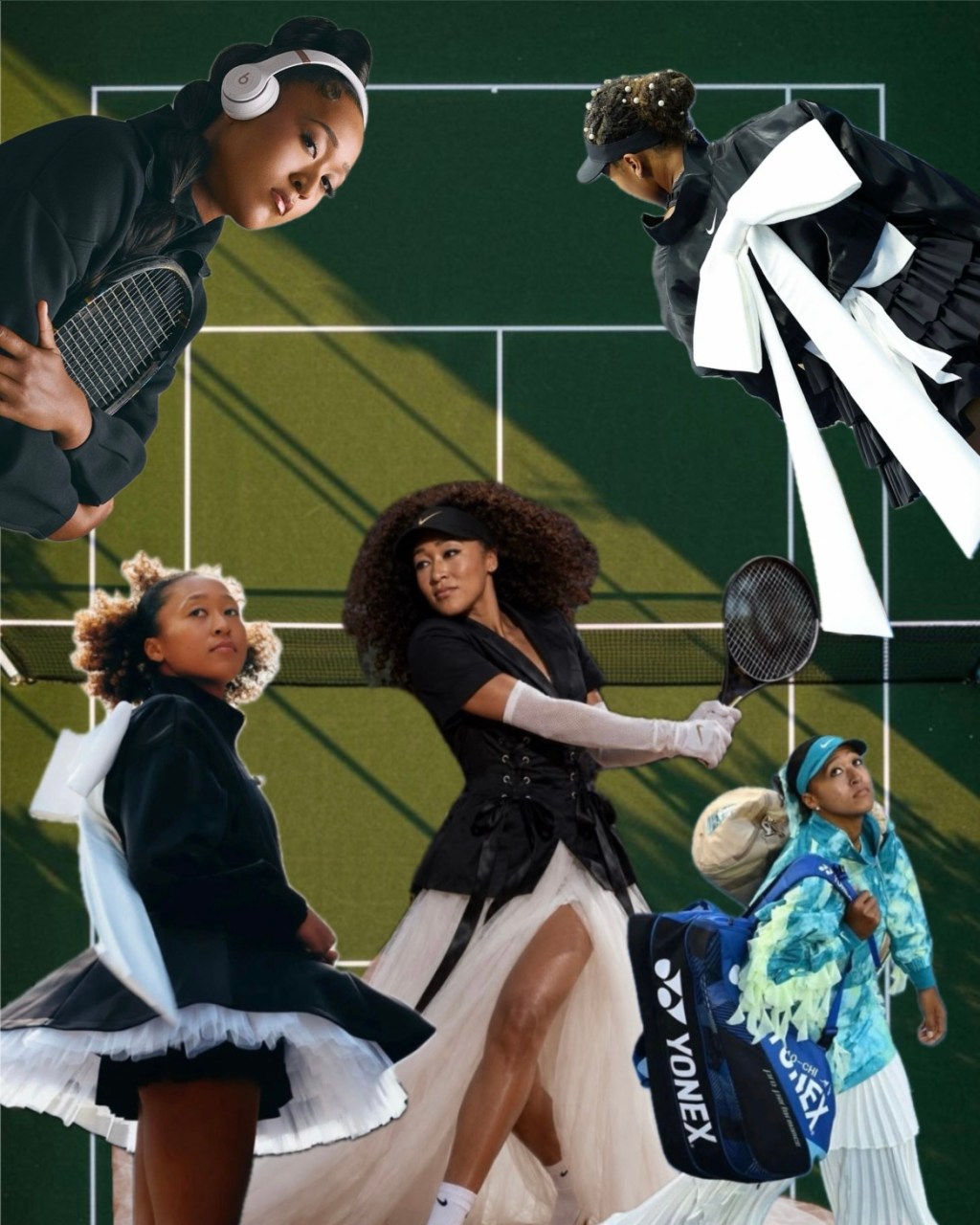
Issued by the Editorial Board, Fashion Law IP Blog.
Fashion has never been interested in athletes merely because they win. Victory may secure headlines, rankings, and trophies, but it does not automatically translate into cultural relevance. The fashion industry has long gravitated towards personalities who embody narratives larger than their professions, individuals whose influence extends beyond performance into identity, creativity, and social consciousness. In recent years, the relationship between sport and fashion has evolved considerably, transforming elite athletes from brand ambassadors into cultural architects capable of shaping trends, consumer behaviour, and public discourse.
Among this new generation of athletes, Naomi Osaka occupies a unique position. A four-time Grand Slam champion and former World No. 1, Osaka has successfully navigated two worlds that were once viewed as separate: professional sport and luxury fashion. Her collaborations with Nike, Louis Vuitton, Levi’s, TAG Heuer, and several other global brands demonstrate that she is valued not merely for her athletic accomplishments, but for the ideas and identity she represents. Rather than functioning as a conventional celebrity endorser, Osaka has become an active participant in design, storytelling, and brand development.
This transformation raises an important question: why has the fashion industry embraced Naomi Osaka more enthusiastically than many other successful athletes? The answer lies not solely in her achievements on the tennis court, but in her ability to embody the values contemporary fashion increasingly celebrates, authenticity, cultural diversity, creativity, resilience, and purpose. Consequently, Naomi Osaka has become not simply a sporting icon, but fashion’s favourite champion.
The Champion Before the Campaign
Before Naomi Osaka became a familiar face at fashion weeks and luxury campaigns, she had already established herself as one of the most accomplished tennis players of her generation. Turning professional at the age of fifteen, Osaka’s breakthrough arrived in 2018 when she defeated Serena Williams to win the US Open, becoming the first Japanese player to win a Grand Slam singles title. Her subsequent victories at the Australian Open in 2019 and 2021, alongside another US Open triumph in 2020, firmly established her as one of the defining athletes of modern tennis.
These achievements provided Osaka with global recognition, but athletic excellence alone does not explain her influence within fashion. Elite sport has produced countless champions whose appeal remained confined to their respective disciplines. Osaka’s distinction lies in her ability to transcend athletic identity. Her multicultural upbringing, personal style, and willingness to engage with broader social issues enabled her to become a figure of cultural significance rather than merely sporting excellence.
In many respects, her tennis career became the foundation upon which a broader public identity was constructed. Success provided visibility, but authenticity transformed that visibility into lasting influence.
When Fashion Saw More Than an Athlete
Historically, luxury fashion houses approached athletes primarily as ambassadors who could enhance visibility for products. Their role was largely promotional, with limited involvement in creative processes. Naomi Osaka represents a departure from this traditional model.
Her appointment as a global ambassador for Louis Vuitton in 2021 signalled a broader shift within luxury branding. Announcing the partnership, Artistic Director Nicolas Ghesquière described Osaka as an individual whose convictions were as inspiring as her achievements. Osaka herself remarked that fashion had always been one of her greatest passions outside tennis.
This relationship was not based solely on commercial value. Louis Vuitton recognised Osaka as someone capable of communicating the brand’s contemporary identity, an identity increasingly defined by diversity, youth, and global perspectives.
Similarly, Nike’s long-term partnership with Osaka extended well beyond apparel sponsorship. Rather than simply wearing products designed by others, she collaborated on performance collections that incorporated elements of her Japanese and Haitian heritage while reflecting her own aesthetic preferences. Her partnership with designer Yoon Ahn further illustrated this creative involvement, producing collections that merged athletic functionality with contemporary fashion design.
Such collaborations demonstrate an important evolution within the fashion industry. Modern athletes are no longer expected merely to model clothing. They increasingly contribute to its conception, design, and narrative.
Identity as a Creative Asset
One of the defining characteristics of Naomi Osaka’s public image is her multicultural identity. Born to a Japanese mother and a Haitian-American father, while growing up in the United States and representing Japan internationally, Osaka embodies multiple cultural experiences simultaneously. Rather than presenting these identities separately, she has consistently embraced them as interconnected aspects of her personal story.
Fashion has increasingly recognised identity as a creative asset rather than a marketing accessory. Osaka’s collaborations frequently reference her cultural heritage through design elements, storytelling, and campaign narratives. Her Levi’s capsule collection, for instance, incorporated themes of sustainability and inclusivity while reflecting aspects of her multicultural background. Likewise, her skincare brand, Kinlò, derives its name from words meaning “gold” in both Japanese and Haitian Creole, illustrating how cultural identity can become an integral part of entrepreneurial branding.
For fashion students, Osaka’s career demonstrates that successful branding increasingly depends upon coherence between personal identity and creative output. Consumers today seek authenticity rather than manufactured perfection, and Osaka’s public image reflects precisely this shift.
Authenticity as the New Luxury
Perhaps the most significant factor distinguishing Naomi Osaka from many other athlete-brand ambassadors is her willingness to embrace vulnerability.
In 2021, Osaka withdrew from the French Open after choosing not to participate in mandatory press conferences, citing concerns regarding her mental health. The decision generated considerable public debate and financial consequences, yet it also initiated an international conversation about athlete well-being and professional expectations. Rather than diminishing her reputation, her openness strengthened public perceptions of authenticity.
This episode marked a significant moment in the evolution of athlete branding. Contemporary consumers increasingly value honesty, emotional intelligence, and social awareness. Luxury brands, traditionally associated with aspiration and perfection, have likewise begun embracing ambassadors whose influence stems from credibility rather than unattainable ideals.
Osaka’s continued partnerships with brands including Louis Vuitton, Nike, and Levi’s following this period suggest that authenticity has become commercially valuable. Her advocacy demonstrated that personal values need not conflict with commercial success; instead, they may reinforce one another when communicated sincerely.
In this sense, Osaka represents a broader transformation within luxury marketing. The contemporary ambassador is no longer expected simply to embody perfection but to represent humanity.
Redefining the Relationship Between Sport and Fashion
The growing relationship between sport and fashion has transformed athletic competition into a platform for creative expression. Sportswear is no longer confined to functionality, while luxury fashion increasingly draws inspiration from athletic aesthetics.
Naomi Osaka has become one of the most visible representatives of this convergence. Whether appearing in Louis Vuitton campaigns, collaborating on Nike collections, or attending international fashion events, she demonstrates that athletic identity can coexist naturally with luxury branding. Her influence extends beyond endorsement campaigns into the broader cultural phenomenon often described as “tenniscore,” where performance apparel intersects with contemporary fashion trends.
Unlike earlier generations of athletes who entered fashion primarily after retirement, Osaka has developed both careers simultaneously. This reflects changing expectations within both industries. Fashion increasingly values performance, diversity, and authenticity, while sport recognises the commercial importance of personal branding and creative expression.
Consequently, Osaka has become a bridge between two industries that now influence one another more closely than ever before.
Conclusion
Naomi Osaka’s significance lies in her ability to move effortlessly between athletic excellence, cultural representation, entrepreneurship, and creative collaboration. Her Grand Slam victories established her credibility, but her authenticity, multicultural identity, and willingness to challenge conventional expectations elevated her beyond the boundaries of professional tennis. Fashion recognised in Osaka not merely a successful athlete, but a contemporary cultural figure whose story reflected the values of an evolving industry.
As luxury fashion continues to prioritise authenticity, inclusivity, and meaningful storytelling, the relationship between athletes and brands will continue to deepen. Naomi Osaka has demonstrated that the modern champion is defined not only by victories on the court but also by influence beyond it. In doing so, she has reshaped expectations of athlete branding and established herself as one of the most significant intersections between sport and fashion in the twenty-first century.
Her journey illustrates that today’s most influential fashion icons are not always designers or models. Sometimes, they begin as champions who simply understand that style, much like sport, is ultimately about confidence, identity, and the courage to redefine the rules.
References
- Mair J, ‘The Rise of Athlete Branding in the Digital Era’ (2021) Journal of Global Sport Management.
- Pegoraro A and Jinnah N, ‘Social Media and Athlete Branding: The Case of Professional Athletes’ (2012) International Journal of Sport Communication.
- Nike, ‘Naomi Osaka’ https://www.nike.com
- Louis Vuitton, ‘Naomi Osaka Campaign’ https://eu.louisvuitton.com
- Levi Strauss & Co., ‘Naomi Osaka x Levi’s’ https://www.levi.com
- TAG Heuer, ‘Naomi Osaka’ https://www.tagheuer.com
- Women’s Tennis Association, ‘Naomi Osaka Player Profile’ https://www.wtatennis.com
- Vogue, ‘Naomi Osaka’ https://www.vogue.com/tag/misc/naomi-osaka
- Business of Fashion, ‘Naomi Osaka’ https://www.businessoffashion.com
- Forbes, ‘Naomi Osaka’ https://www.forbes.com
- Women’s Wear Daily, ‘Naomi Osaka’ https://wwd.com
- ‘Naomi Osaka Becomes Louis Vuitton Brand Ambassador’ Vogue (2021) https://www.vogue.com
- ‘Naomi Osaka Is the World’s Highest-Paid Female Athlete’ Forbes (2021) https://www.forbes.com
- ‘Naomi Osaka on Fashion, Identity and Representation’ Business of Fashion https://www.businessoffashion.com
 FASHION LAW
Leave a comment