
This article is authored by Shreesti Phunyel, a third year B.A.LLB (Hon’s) student at the National Law University and Judicial Academy, Assam.
Introduction
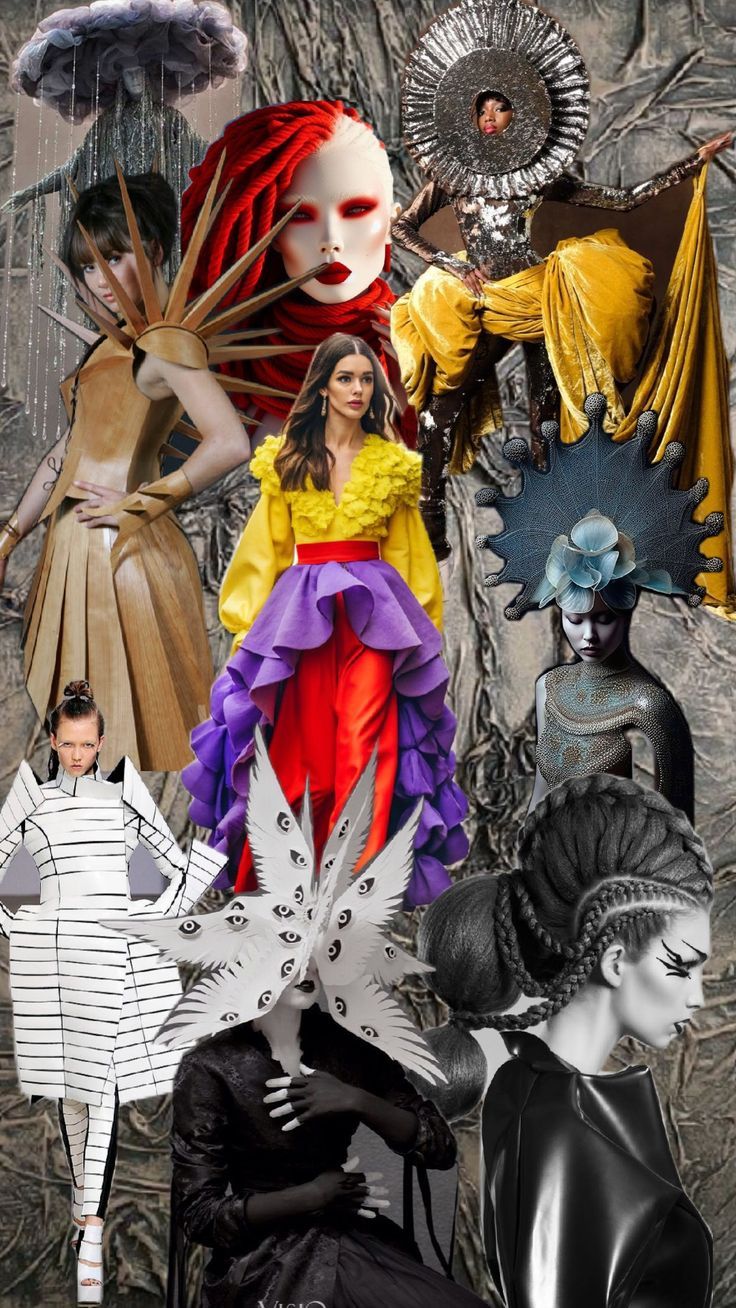
Fashion has long transcended its conventional role as clothing to become a medium of artistic expression, cultural commentary, and conceptual experimentation. Among the many movements that have challenged traditional notions of dress, avant-garde fashion occupies a distinctive position by rejecting established standards of beauty, functionality, and commercial appeal in favour of deconstruction, abstraction, and aesthetic disruption. Unlike conventional fashion, whose value often lies in its visual appeal or marketability, avant-garde fashion derives its significance from challenging accepted norms and continually redefining the boundaries of creativity.
The works of designers such as Rei Kawakubo, Yohji Yamamoto, Martin Margiela, and Iris van Herpen exemplify this philosophy, transforming fashion into a form of conceptual art where garments function not merely as wearable objects but as vehicles for artistic and cultural discourse. Such designs frequently blur the distinction between fashion, sculpture, performance, and visual art, making them difficult to evaluate through legal frameworks that rely upon identifiable expression, stable authorship, and conventional notions of originality.
This presents a fundamental challenge for intellectual property law. Copyright doctrine has traditionally been developed around works capable of being attributed to a discernible author and expressed in a sufficiently fixed and original form. Avant-garde fashion, however, often derives its value from reinterpretation, experimentation, unconventional construction techniques, distorted silhouettes, anti-fashion aesthetics, and conceptual innovation, rather than from easily identifiable artistic expression. As a result, existing legal doctrines struggle to distinguish protectable expression from unprotectable ideas, creative processes, or shared aesthetic vocabularies.
This article examines the relationship between avant-garde fashion and intellectual property law through the lens of the idea-expression dichotomy, the merger doctrine, and scènes à faire. It argues that while these doctrines seek to preserve the balance between exclusive rights and the public domain, they simultaneously expose the limitations of contemporary intellectual property law in addressing forms of creativity that deliberately resist categorization and conventional standards of ownership and originality. By situating avant-garde fashion within the broader discourse on artistic innovation and legal protection, the article contends that existing intellectual property frameworks remain inadequately equipped to govern creative practices rooted in abstraction, reinterpretation, and aesthetic rebellion. It further argues that this tension calls for a more nuanced understanding of originality and authorship, one that better reflects the evolving nature of conceptual fashion design.
What does Avant-Garde mean in fashion?
Avant-Garde comes from the French word meaning “advance guard” or “vanguard”. Avant-Garde goes against all the common understandings of beauty, identity and function in fashion, by changing the definition of clothes from something that was purely functional and aesthetic to become an art form used for criticism of society. Avant-Garde is not only a style, but it is also a form of disruption, which means that it goes further than what is considered beautiful or fashionable.
In the past, this disruption has shown up in the following ways:
- Deconstructed clothes that show how clothes are made
- Silhouettes that are distorted and goes against natural body norms
- Expression that goes against mainstream trends on purpose
These parts show how fragile established aesthetics are by showing that what we think of as “normal” in fashion is made up, temporary, and open to evolve.
Historical development of Avant-Garde fashion
Avant-garde fashion design is an approach to fashion styling that originated during the 19th century and is an adaptation of the French language term meaning ‘advance guard,’ which refers to being ahead of one’s time. Avant-garde fashion was first introduced by artists in France such as Saint-Simon, who saw artists as revolutionaries in both culture and society, and not only as creative individuals.
Avant-garde was born from art movements that wanted to question the status quo and defy established traditions of art by pushing the envelope further to achieve creativity. The 19th and early 20th centuries witnessed emergence of artistic styles such as “Dadaism” and “Surrealism” that questioned notions of beauty and logic through shock and absurdity in art.
Avant-Garde in fashion:
Avant-garde was introduced to fashion world much later in the 20th century when fashion became another way of expressing art. Famous designer Elsa Schiaparelli was instrumental in bringing avant-garde fashion with her collaboration with artists in surrealism.
Revolution in Japanese Avant-Garde fashion:
The 1980s witnessed avant-garde fashion change in ways that were never seen before by Japanese designers such as:
- Rei Kawakubo
- Yohji Yamamoto
Kawakubo Rei’s designs challenge the conventional forms, evident in her collections such as Body Meets Dress, Dress Meets Body, in which she uses padding to create distorted and asymmetric forms. The latter’s works, too, follow a similar pattern. He uses voluminous and monochrome garments to challenge the Western tailoring techniques and accentuate the fluidity of the body.
Deconstruction And Contemporary Expansion
Further development included such figures as Martin Margiela, who used extreme deconstruction and innovative materials, showcasing garment structure. Instead, Martin Margiela develops a deconstructive aesthetic, showing seam lines, lining, and creating garments using unusual or leftover materials, thus breaking down fashion structures and exposing its imperfection.
Next came fashion designers who were interested in pushing boundaries further and introducing avant-garde fashion with help of technology. Iris van Herpen is known for being more technologically inclined and combining elements of science and fashion into innovative creations that include sculptures created through 3D printing techniques and unique material use.
Finally, Hussein Chalayan explores the theme of change and time, working with clothing that changes or moves on their own due to external factors. His themes include issues of identity, migration, and temporality.
On the one hand, many avant-garde trends and styles have become widely used and common in the field of fashion. However, the concept of avant-garde continues to be relevant since it constantly evolves and experiments. Fashion is no exception since its avant-garde is constantly breaking boundaries, challenging conventions, and setting new standards in fashion and culture.
The Copyright Dichotomy of Expression vs. Idea
Copyright law rests on the doctrine of the idea–expression dichotomy, which differentiates between unprotectable ideas and protectable expressions.
Baker v. Selden (1879) established the concept of idea-expression dichotomy in which the U.S. Supreme Court recognized the difference between an account book that described an accounting system and the system itself.
In this case, the Supreme Court held that copyright covers expressions of ideas rather than the idea themselves or the process itself. Notwithstanding the fact that the language of “idea” and “expression” was not mentioned in this case, the concept became the foundation for copyright theory in later years as well as affirmed in Mazer v. Stein (1954).
An even more elaborate development of idea-expression theory occurred in the case of Computer Associates International Inc. v. Altai Inc. (1992). In this case, the “Abstraction-Filtration-Comparison test” Test was introduced. This test aims at identifying those elements of a work that are unprotected and those that are protected as expressions of ideas.
Application To Avant-Garde Fashion: Merger Doctrine and Scènes à Faire
In the case of avant-garde fashion, this issue carries great significance since the idea is often the design philosophy in question, such as deconstruction or anti-fashion aesthetics or even anti-constructional clothing.
The concept is exemplified by the development and evolution of designers like Yohji Yamamoto and Martin Margiela, whose designs are often termed avant-garde because of their innovation in silhouette creation and construction. Yet, there have been instances of similar deconstructive aesthetics in Japanese avant-garde fashion long before, leaving the question open as to whether these newer interpretations of old styles can be termed new at all or whether they are just expressions of earlier concepts. Thus, the very nature of idea-expression problem is illustrated here as well since it leaves one in doubt whether the thing protected in this case is the idea or the specific expression of the idea.
For instance, if a designer expresses a deconstructed aesthetic by utilizing exposed seams, raw incomplete edges, or visible garment construction, then an underlying idea is not protectable. However, where such features are one of the few or most direct ways of expressing that idea, the merger doctrine works to deny protection on the ground that the idea and its expression have successfully merged.
Similarly, the scènes à faire doctrine does not protect elements that are considered common or customary to a particular genre. Asymmetry, deconstructed construction or unfinished edges may enter a common stylistic language in avant-garde fashion.
When multiple designers employ these elements as standard features of “anti-fashion,” they are treated as inherent to the genre and therefore fall outside the scope of protection.
While individual designs may exhibit originality, the broader conceptual and stylistic elements remain largely unprotectable, leaving only a narrow scope for legal protection
Indian Legal Context
These principles are also enshrined in the Indian law according to the Copyright Act, 1970. In R.G. Anand v. Deluxe Films, the Supreme Court ruled that copyright does not exist merely in ideas, themes or concepts but only in the expression. Where there is no substantial copying of expression, similarity due to common ideas is not infringement.
Applying this to avant-garde fashion, the general philosophy of deconstruction would remain unprotectable, while a specific garment may qualify for protection if it demonstrates sufficient originality. Moreover, Indian courts have implicitly recognised limitations similar to scènes à faire by excluding elements that are standard or inevitable within a genre.
Thus, even within the Indian framework, protection is confined to specific expression, leaving broader stylistic features in the public domain.
Protection and Structural Limits in Avant-Garde fashion
The relationship between avant-garde fashion and intellectual property laws is a constantly existing tension due to its radical nature.
- Boris groys’ theory
According to the theory of Boris Groys, whatever is disruptive and innovative will eventually be accepted by the mainstream culture to become one more style, similar to Margiela and Kawakubo’s collections that used to be innovative and avant-garde in the past but today are replicated widely. It results in a decrease in originality and makes IP laws less effective since they protect products of exclusive nature.
- Decline of “shock value”
While IP law does not protect “shock,” rapid diffusion of avant-garde elements transforms them into common features, reducing their protectability under doctrines like scènes à faire.
- Limitations of design and patent-based protection
In the context of 3D design and patent law, additional challenges arise because patents require novelty, invention , and industrial applicability, whereas avant-garde creations are often experimental, non-reproducible, and pure aesthetic. This creates a mismatch, as patent law protects technical solutions rather than artistic expression.
- Limitations under the Designs Act, 2000 (India)
A major limitation arises under the Designs Act, 2000, which requires designs to be applied to articles capable of industrial reproduction. Many avant-garde creations particularly conceptual or one-off works such as sculptural garments are not intended for mass production. As a result, they may fail to qualify for protection altogether.
This represents a more significant limitation than the idea-expression dichotomy, as such works are excluded at the threshold level, not due to lack of originality but because they do not fit within the industrial framework of design law.
- Patent-based protection limitations
Patent law requires novelty, inventiveness and industrial applicability. Avant garde fashion, being artistic and experimental, does not always fit these criteria.
- Blur between inspiration and infringement
In the end, what presents the most difficult hurdle is the “inspiration versus infringement” gray area, wherein it is impossible to separate influence from copyright infringement.
Thus, it can be seen that avant-garde fashion reveals an essential limitation in the protection of intellectual property, particularly its inability to account for creativity that is constantly changing and challenging.
Conclusion
Fashion’s avant-garde exposes a fundamental paradox in intellectual property law: a system designed to safeguard concrete, recognizable creations is poorly suited to capture creativity that is fluid, iterative, and resistant to ownership.
This article does not advocate a new sui generis regime or an uncritical extension of existing doctrines. Instead, it suggests a context-dependent application of established principles, recognizing that the creativity of avant-garde fashion may lie in combination and conceptual innovation rather than in isolated elements.
At the same time, certain aspects of avant-garde creativity may deliberately exist beyond the reach of intellectual property law. Its emphasis on disruption and reinterpretation challenges the very premise of exclusivity. The role of law, therefore, is not to fully enclose such creativity, but to balance protection with the need to sustain an open and evolving creative ecosystem.
References
- Best, Kelly L. Reddy, and Leslie Davis Burns. “Avant-Garde Fashion: A Case Study of Martin Margiela.” International Journal of Costume and Fashion, vol. 13, no. 2, Dec. 2013, pp. 1–13.
- Chen, Tianyue, et al. “A Study on the Brand Culture of Avant-Garde Clothing with Yohji Yamamoto as an Example.” 2022, pp. 88–95.
- Jain, Sankalp. “The Principle of Idea-Expression Dichotomy: A Comparative Study of US, UK & Indian Jurisdictions.” SSRN Electronic Journal, 2012.
- Patri, T. “The Relevance and Evolution of the Idea-Expression Dichotomy under Copyright Law.” International Journal of Creative Research Thoughts (IJCRT), vol. 12, no. 2, 2024.
Cases cited
- Baker v. Selden, 101 U.S. 99 (1879)
- Mazer v. Stein, 347 U.S. 201 (1954)
- Computer Associates International, Inc. v. Altai, Inc., 982 F.2d 693 (2d Cir. 1992)
- R.G. Anand v. Deluxe Films, (1978) 4 SCC 118
 FASHION LAW
Leave a comment