
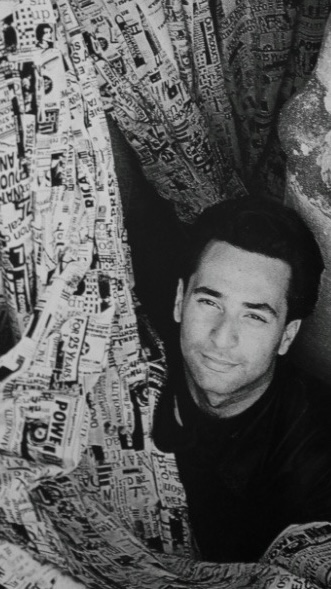
Issued by the Editorial Board, Fashion Law IP Blog.
There was a time when “Indian fashion designer” was barely an established professional identity.
India had textiles. It had master craftsmen, embroiderers, weavers, tailors and centuries of sophisticated sartorial traditions. It had the sari, the kurta, the sherwani and an extraordinary vocabulary of regional dress. What it did not yet have, in the contemporary sense, was a recognisable fashion industry built around designers as creative authors, labels as cultural identities and fashion as an organised luxury business. Into this gap stepped Rohit Khosla.
His significance was not simply that he designed clothes. It was that he arrived at a moment when Indian fashion was still trying to understand what it could become. In a career that lasted barely a decade, Khosla helped move Indian fashion away from the idea of clothing as something produced by anonymous tailors or inherited through tradition, towards a system in which design, authorship, retail, image-making and luxury could exist together. Contemporary accounts identify the mid-1980s as a decisive turning point for the Indian fashion industry, with Khosla among the designers who gave the emerging profession its preliminary shape.
His story is therefore not merely the story of a designer. It is the story of an industry learning how to call itself fashion.
Before the Designer
For much of post-independence India, clothing existed within a very different cultural and economic structure. Traditional dress remained deeply embedded in everyday life, while Western clothing was increasingly available through urban retail and garment manufacturing. Tailoring was widespread, but the contemporary idea of the designer as a distinct creative and commercial figure had not yet fully developed. By the 1980s, however, this began to change.
India was experiencing an emerging urban consumer culture, and fashion was beginning to acquire a new visibility. Designers such as Ritu Kumar and Satya Paul were already establishing important practices, while institutions such as the National Institute of Fashion Technology, established in Delhi in 1986 with assistance from the Fashion Institute of Technology in New York, signalled the growing institutionalisation of fashion education. Khosla entered precisely at this moment of transition.
Born in 1958, he attended The Doon School before studying art and subsequently fashion at Kingston University in England. His education exposed him to a fashion environment in which clothing was treated as design, rather than simply manufacture. His return to India consequently involved more than bringing Western fashion knowledge home.
Finding Modernity Without Abandoning India
Khosla’s answer was neither a rejection of Indian tradition nor an uncomplicated imitation of Western fashion. His contribution lay in the tension between the two.
India possessed an extraordinary material and craft vocabulary, but Khosla approached those traditions through the lens of contemporary design. His work explored structure, experimentation, textiles and construction while remaining connected to the visual and material language of India.
This distinction matters. The emergence of Indian fashion did not require India to become aesthetically European. Rather, designers such as Khosla demonstrated that Indian materials, techniques and cultural references could be reorganised through modern design principles.
His work therefore participated in a larger transformation. Tradition ceased to be merely something inherited and became something that could be designed anew.
The book Rohit Khosla: Vanguard, compiled by his sister Rohini Khosla with Amanda Johnston, documents the breadth of this experimentation through collections and themes including Wood & Rope, Crinkle, Le Nuit des Sirènes, Dust & Coal and Call on the Kelim. The very structure of the book illustrates that Khosla’s practice was not limited to a single identifiable style, experimentation was central to his method.
1987: Building the Fashion Industry
If Khosla’s clothing helped redefine what Indian fashion could look like, his contribution to the fashion business helped determine where that fashion could exist.
In 1987, Khosla became associated with the founding of Ensemble in Mumbai alongside Tarun and Sailaja Tahiliani. The multi-designer boutique brought several contemporary labels together under one retail environment, including Khosla, Tarun Tahiliani, Abu Jani and Sandeep Khosla, Neil Bieff and others. This was considerably more important than the opening of another boutique.
Ensemble represented an early attempt to construct an ecosystem around the Indian designer. Instead of a customer approaching a tailor for an individual garment, the consumer could encounter designers as distinct creative identities.
The label became meaningful. The boutique became a curated fashion space. The designer became part of the product’s value. And fashion began to move towards a recognisable luxury economy.
Contemporary reporting described the late 1980s as a period in which haute couture and designer boutiques were rapidly emerging in Indian cities. Ensemble therefore belonged to a much larger transformation, but Khosla was one of the figures helping to give that transformation its vocabulary.
From Garment to Image
Khosla also understood something that would become increasingly important to Indian fashion, clothes did not exist independently of the images surrounding them.
He worked in styling and advertising, including campaigns associated with Garden Vareli, helping create a visual language in which fashion could be presented as aspiration, lifestyle and identity rather than merely as clothing. Contemporary accounts also connect his work to the development of fashion photography and image-making in India. This was a significant cultural shift.
A designer label does not become powerful merely because its garments are technically accomplished. It becomes powerful when consumers recognise a particular world around those garments.
Khosla contributed to that world-building at a time when India’s fashion industry was only beginning to develop its own visual vocabulary. His collaboration with photographer Prabuddha Dasgupta is particularly important in retrospect. Their work helped establish a more sophisticated relationship between fashion, photography and the representation of the modern Indian body. Recent scholarship and retrospective writing on Khosla have consequently positioned his practice not only within clothing design but within a broader transformation of Indian visual culture.
A Designer Who Trained a Generation
Khosla’s influence was also transmitted through people. Several designers who subsequently became important names in Indian fashion passed through his studio or were influenced by his practice, including Ranna Gill, Sonam Dubal and JJ Valaya. This gives his legacy a different dimension.
Design history is often written through objects: collections, dresses, photographs and exhibitions. But industries are also built through knowledge transfer.
A designer who teaches another designer does more than create a garment. They reproduce a method. Khosla’s influence therefore extended beyond the clothes that survived him. It existed in the designers who absorbed his understanding of proportion, experimentation, presentation and professional practice and carried those ideas into the next generation.
Modern India, Not Western India
There is a temptation to describe Khosla’s modernity simply through his international education. That would miss the more interesting point. His importance was not that he had studied abroad and brought Western fashion back to India. His importance was that he helped create a version of modernity that could operate within Indian fashion itself.
The distinction is crucial. Modernisation does not necessarily mean Westernisation. Khosla worked during a period in which India was increasingly exposed to international fashion, media and consumer culture. Yet his contribution lay in negotiating that exposure with India’s own textile, craft and cultural histories. This negotiation remains one of the central questions of Indian fashion today.
How can a designer participate in global fashion without becoming aesthetically indistinguishable from everyone else? Khosla’s work offered an early answer. Modernity could be constructed through reinterpretation rather than elimination.
A Career Cut Short
Khosla’s career ended abruptly. He died in 1994 at the age of thirty-six, at a moment when Indian fashion was only beginning to acquire the institutional and commercial infrastructure that would later become familiar.
His early death inevitably altered the trajectory of his legacy. Unlike designers who have had decades to consolidate a house, expand internationally and build a commercial archive, Khosla left behind a comparatively short body of work.
Yet the brevity of his career arguably makes his influence more striking. In less than a decade, he participated in the emergence of the designer label, helped establish multi-designer retail, experimented with materials and construction, contributed to fashion imagery and influenced a generation of designers.
In 1996, his sister Rohini Khosla and Amanda Johnston published Rohit Khosla: Vanguard, preserving his work through reproductions, commentary and a chronology of his career.
His name subsequently continued to appear in retrospectives of Indian fashion, while the Rohit Khosla Award for Debutante Designer of the Year was established to commemorate his contribution to the industry.
What Did Rohit Khosla Actually Change?
Calling Khosla a “pioneer” is easy. Explaining what he pioneered is more difficult. He did not invent Indian textiles. He did not invent couture. He did not invent embroidery or tailoring.
What he helped create was the infrastructure and imagination of the modern Indian designer. He arrived when Indian fashion was still fragmented and helped demonstrate that a designer could have a recognisable creative identity; that several such identities could coexist within a curated retail environment; that Indian craft could be translated into contemporary luxury; that fashion could be communicated through photography and advertising; and that designers could influence one another as a professional community.
In other words, Khosla helped transform fashion from a collection of garments into an industry of ideas, identities and authorship. That is why his story belongs in the history of modern Indian fashion.
Putting Modern India on the Fashion Map
India possessed sophisticated systems of dress, textile production and craftsmanship long before the contemporary designer emerged. The argument is narrower, and more significant. Khosla helped put the modern Indian fashion designer on the map.
He belonged to a generation that transformed fashion from something largely understood through craft, tailoring and inherited dress into something increasingly understood through design, authorship, labels, retail and visual culture. Contemporary accounts of Indian fashion repeatedly locate the mid-1980s and the emergence of figures such as Khosla at the point when the country’s fledgling fashion industry began to take recognisable shape.
His legacy is therefore not measured simply by the number of garments he produced. It is measured by the possibilities he helped make visible.
Today, Indian designers operate within a global fashion economy, build international brands, collaborate with global houses, present collections to international audiences and negotiate questions of heritage, identity and contemporary design. That ecosystem did not appear overnight. Someone had to imagine the designer before the industry knew what to do with one.
Rohit Khosla was one of those people. And perhaps that is the most remarkable part of his story, he helped build a fashion industry before India had fully decided that it wanted one.
The question, then, is not simply whether Rohit Khosla changed Indian fashion. It is how different would Indian fashion look today if he had been given more time to finish what he started?
References
1. Rohini Khosla, Rohit Khosla and Amanda Johnston, Rohit Khosla: Vanguard (India Book House 1996).
2. ‘We Were Like This Only’ Business Standard (15 September 2010).
3. ‘The Couple Who Took Fashion Off the Street’ Business Standard (18 October 1997).
4. Tina Tahiliani Parikh, ‘There Was No Platform to Celebrate Indian Design Back Then’ Vogue India (2021).
5. Praachi Raniwala, ‘Multi-designer Store Ensemble Has a New Address in Mumbai’ Vogue India (9 August 2017).
6. Rujuta Vaidya, ‘9 Indian Designers on Their Journey with Ensemble, on Its 30th Anniversary’ Vogue India (11 December 2017).
7. ‘Prabuddha Dasgupta: Vogue Retrospective’ Vogue India (12 August 2012).
8. Upasana Das, ‘Celebrating 68 Years of the Legendary Photographer Prabuddha Dasgupta’ Harper’s Bazaar India (16 September 2024).
9. ‘The History of Fashion in India’ Business Standard (15 September 2010).
10. National Institute of Fashion Technology, Fashion Design: Historical Context (Indira Gandhi National Open University/eGyanKosh).
11. Ensemble, ‘Ensemble’ (DLF Emporio).
12. Ensemble, ‘Ensemble Prêt’ (DLF Emporio).
 FASHION LAW
Leave a comment