
This article is authored by Anushka Naugain. She is an advocate practising before the High Court of Delhi, with a focus on contract law, intellectual property, and mediation.
A luxury handbag does not necessarily die when its first owner stops carrying it. It may be placed in a wardrobe, passed to a daughter, sold through a consignment platform, restored by an independent artisan, displayed in a collector’s archive, or auctioned decades after it first left the boutique. Its physical life may therefore extend far beyond the commercial relationship for which the brand originally created it.
But there is a peculiar legal question hiding inside that afterlife: who controls the object once the brand has already sold it?
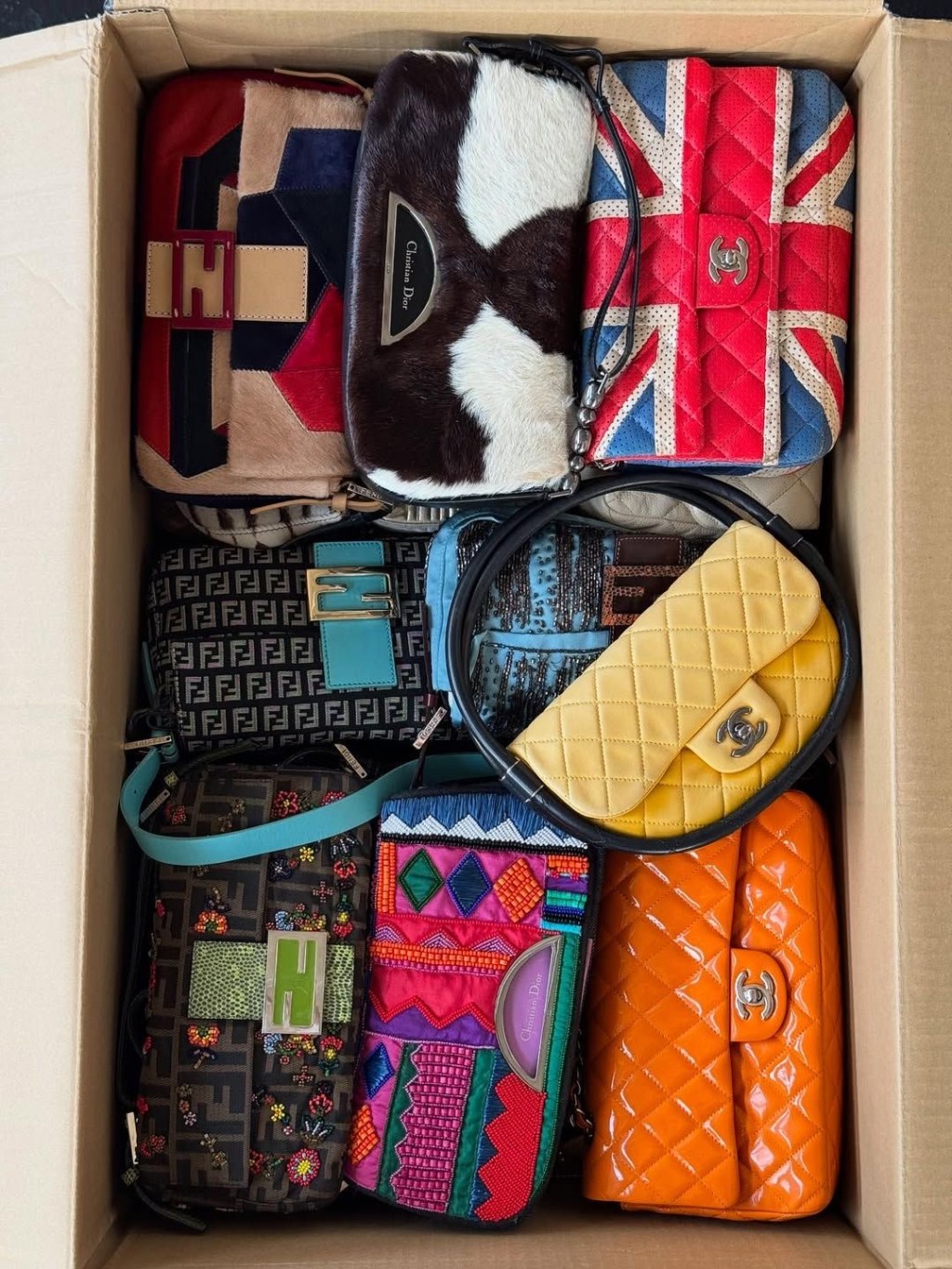
Consider a Chanel flap bag purchased from an authorised boutique. The transaction appears simple. Chanel designs and manufactures the bag, the consumer pays for it, ownership of that physical object passes to the consumer. Years later, the owner sells it to another person through a resale platform. The second owner sells it to a collector. The collector consigns it to an auction house. The auction house advertises it using the Chanel name.
At what point does Chanel cease to control the bag?
The answer lies partly in one of the most important, and least visible, principles of intellectual property law: exhaustion. Once genuine goods bearing a trade mark have been lawfully placed on the market by the proprietor or with its consent, the proprietor’s ability to control subsequent dealings in those goods is generally limited. In India, Section 30(3) of the Trade Marks Act 1999 expressly provides that subsequent sale or dealing in lawfully acquired goods does not constitute infringement merely because the goods were originally placed on the market under the proprietor’s trade mark. Section 30(4), however, preserves a qualification where legitimate reasons exist to oppose further dealings, particularly where the condition of the goods has been changed or impaired.
The luxury handbag therefore acquires something more than a second owner. It acquires a second legal life.
From Brand Property to Personal Property
The first stage of a luxury bag’s life is one of concentrated brand control.
Before a bag reaches the consumer, the brand determines almost everything. It’s materials, construction, colour, hardware, logo placement, packaging, retail environment and authorised channels of distribution. For luxury houses, this control is not merely functional. It is central to the construction of scarcity and prestige.
A Hermès Birkin, a Chanel Classic Flap or a Louis Vuitton Speedy is therefore sold as more than a utilitarian container. Its value is partly generated by the identity attached to it. The trade mark does not merely identify who manufactured the object, it communicates a history, aesthetic system and expectation of quality. The legal relationship changes, however, once the authentic product has been lawfully sold.
The consumer does not merely acquire permission to look at the bag. They acquire the physical object itself. They may use it, store it, gift it, donate it and, subject to applicable law, sell it. Intellectual property does not ordinarily operate as a perpetual reservation of every commercial possibility surrounding a physical object.
This distinction is fundamental. Owning a Chanel bag is not the same thing as owning the Chanel trade mark. The consumer owns the bag, Chanel continues to own its intellectual property rights. Exhaustion exists partly to prevent those two forms of ownership from becoming confused.
The First Resale: When the Brand Loses Distributional Control
The most straightforward second life begins when the owner decides to sell.
Suppose the Chanel bag is authentic, was originally purchased through an authorised channel, and remains substantially in the condition in which it was sold. A resale platform subsequently lists the bag as a pre-owned Chanel product. Can Chanel simply say no? Generally, trademark exhaustion makes such a proposition difficult.
In India, Section 30(3) of the Trade Marks Act specifically recognises that where goods bearing a registered trade mark have been lawfully acquired, subsequent sale or dealing in those goods is not infringement merely because the proprietor originally placed them on the market or consented to their placement on the market.
The principle is reflected in other major jurisdictions as well. Under Article 15 of the EU Trade Mark Directive, for example, a trade mark proprietor cannot ordinarily prohibit use of the mark in relation to goods placed on the Union market by the proprietor or with its consent. The important qualification is that legitimate reasons may justify opposition to further commercialisation, particularly where the condition of the goods has been changed or impaired. The doctrine therefore creates a deliberate limit on brand control. A luxury house may decide how it sells its bag the first time. It cannot necessarily decide whether the owner may sell the same authentic bag a second time.
This distinction has become increasingly significant as the secondary luxury market has expanded. Platforms such as The RealReal and other specialised resale businesses have transformed the second-hand market from an informal exchange between individuals into a sophisticated commercial ecosystem involving authentication, pricing, photography, logistics, consignment and marketing.
The legal question consequently moves beyond the private wardrobe. It becomes a question of whether a business can commercially refer to another company’s genuine products without that company’s permission.
Chanel, The RealReal and the Problem of Authenticity
The tension can be seen particularly clearly in the long-running litigation between Chanel and The RealReal.
Chanel sued The RealReal in 2018, raising trademark, advertising and counterfeiting-related claims. The case became emblematic of the tension between luxury brands seeking control over their reputations and resale businesses relying upon the legitimacy of the secondary market. The litigation remained unresolved for years. After periods of mediation and stays, the court lifted the stay again in March 2026 after the parties failed to reach an agreement. The dispute demonstrates that exhaustion does not make every activity surrounding a genuine product automatically lawful.
The law distinguishes between reselling an authentic product and creating the impression that the reseller is authorised, affiliated with, endorsed by or otherwise connected to the brand.
That distinction matters enormously in luxury fashion. A reseller may need to say that a bag is a Chanel bag because that is precisely what it is selling. But saying “this is an authentic Chanel bag” is conceptually different from suggesting “Chanel has authorised this seller” or “this resale service forms part of Chanel’s official distribution network.”
The first describes the product. The second potentially describes a relationship that may not exist. Thus, exhaustion does not destroy the trade mark. It limits what the trade mark can control.
The Bag Changes: Where Exhaustion Becomes Complicated
The legal landscape becomes substantially more interesting when the second life of the bag involves alteration. Imagine a vintage Hermès bag that is professionally restored. Its leather is repaired, its hardware polished and its interior cleaned. Has anything legally significant happened?
Now change the facts. The bag is recoloured neon green, its original hardware is replaced, its logo remains visible, and the modified bag is advertised commercially as a Hermès bag. The object is still authentic in origin. But it is no longer necessarily the same product that the brand placed on the market.
This is where the limits of exhaustion become important. Section 30(4) of India’s Trade Marks Act allows a proprietor to oppose further dealings where legitimate reasons exist, particularly where the condition of the goods has been changed or impaired. The EU adopts a comparable principle, expressly allowing opposition where the condition of goods has been changed or impaired after their placement on the market. The issue is therefore not simply whether the bag is genuine. It is whether the thing now being commercially presented under the brand’s identity remains the thing whose distributional control has already been exhausted.
Recent European litigation illustrates how consequential that distinction can become. In 2025, Hermès successfully challenged the commercial use of its scarves in upcycled jackets, while in May 2026 a Paris court similarly ruled against the use of Chanel-branded components in newly created jewellery. The courts treated the defendants’ products as new products marketed under Chanel or Hermès marks rather than merely subsequent sales of the original branded goods. This creates a fascinating boundary. Repairing a bag for its owner is one thing. Reselling an altered bag as though it represents the brand’s own product is another.
The distinction protects both sides: the consumer’s ownership of the physical object and the brand’s legitimate interest in controlling the commercial meaning of its trade mark.
The Collector’s Bag
There is another stage in the object’s life where the relationship becomes even more interesting, the luxury bag as collectible.
A vintage Chanel bag may become valuable not because it is new, but precisely because it is old. A discontinued Louis Vuitton design may acquire historical significance. A rare Hermès colour may become more desirable after production ends. The market can therefore create value that the original manufacturer no longer directly controls.
The bag may travel from consumer to reseller, from reseller to collector, and from collector to auction house. At each stage, the trade mark remains attached to the physical object as an identifier of origin, but the economic value of the object increasingly derives from its history. This creates an unusual inversion. The brand originally creates the object. The secondary market subsequently creates part of its mythology.
A luxury house may control its boutiques, its current collections and its authorised retail environment. It cannot necessarily prevent an owner from deciding that a twenty-year-old bag belongs in a private collection rather than a wardrobe.
The secondary market thus becomes an independent layer of fashion’s economy.
The New Luxury Battle: Authenticity, Restoration and Brand Image
Luxury brands nevertheless have a powerful reason to resist complete loss of control. Their value depends heavily upon reputation.
If a damaged or heavily modified product is sold under a luxury mark without adequate disclosure, consumers may reasonably assume that the brand manufactured, approved or stands behind the altered condition. The brand’s argument is therefore not necessarily that it should own the customer’s bag again. Rather, it is that the customer should not be able to use the brand’s identity to make an altered object appear to be an officially sanctioned product. This is why authenticity has become such an important battleground in resale.
The paradox is striking. The stronger the brand, the more valuable its genuine products become after leaving its control. Yet the more successful the secondary market becomes, the more difficult it becomes for the brand to control how its identity is presented.
Luxury therefore creates a peculiar legal problem. The product is scarce, but the trade mark is everywhere.
The Second Life of Luxury
The life of a luxury bag can ultimately be understood as a gradual transfer of control.
At creation, the brand controls the object. At first sale, ownership of the physical object moves to the consumer. At resale, exhaustion limits the brand’s ability to control further distribution. At alteration, restoration or upcycling, the balance becomes more complicated. At auction, the bag becomes both product and historical artefact.
And throughout this process, the trade mark remains attached, not necessarily as a mechanism of perpetual control, but as a sign whose commercial meaning the law continues to regulate. This is what makes exhaustion particularly important in fashion law. It is not simply a technical limitation on trademark rights. It is a legal recognition that ownership must eventually mean something to the person who owns the thing.
A luxury brand can create desire, manufacture scarcity and construct an extraordinary symbolic world around a handbag. But once the authentic bag has been lawfully sold, the law does not necessarily allow that world to follow the object indefinitely.
The Chanel bag can leave Chanel’s boutique. The Hermès bag can leave Hermès’ distribution network. The Louis Vuitton bag can pass from one wardrobe to another. And perhaps that is the most interesting thing about fashion’s second-hand economy, the object survives the moment of sale, but the brand’s control does not survive in exactly the same form.
References
1. Trade Marks Act 1999, ss 29–30.
2. Directive (EU) 2015/2436 of the European Parliament and of the Council of 16 December 2015 to approximate the laws of the Member States relating to trade marks, art 15.
3. Regulation (EU) 2017/1001 of the European Parliament and of the Council of 14 June 2017 on the European Union trade mark, art 15.
4. Chanel Inc v The RealReal Inc, No 18 Civ 10626 (S.D.N.Y. 2018).
5. Tribunal judiciaire de Paris, 10 April 2025, no 22/10720, Hermès International and Hermès Sellier SAS v Maison R&C SAS U, Atelier R&C SAS U and Géraldine Lugassy Demri.
6. Tribunal judiciaire de Paris, 21 May 2026, no 25/00621, Chanel v Kamad Reworked.
7. Parfums Christian Dior SA v Evora BV, Case C-337/95 [1997] ECR I-6013.
8. Silhouette International Schmied GmbH & Co KG v Hartlauer Handelsgesellschaft mbH, Case C-355/96 [1998] ECR I-4799.
9. Davidoff & Cie SA v A & G Imports Ltd, Case C-414/99 [2001] ECR I-8691.
10. Copad SA v Christian Dior couture SA, Case C-59/08 [2009] ECR I-3421.
11. Zino Davidoff SA v A & G Imports Ltd, Case C-414/99 [2001] ECR I-8691.
12. Art & Allposters International BV v Stichting Pictoright, Case C-419/13 EU:C:2015:27.
13. Michal Bohaczewski, ‘Upcycling vs Trade Mark Exhaustion: Why the Paris Court Is Right’ (Kluwer Trademark Blog, 16 July 2026).
14. Eleonora Rosati, ‘Upcycling’s (limiting) blues: can courts find a better path to promote a circular economy?’ (2026) 21 Journal of Intellectual Property Law & Practice 269.
15. Lionel Bently and Brad Sherman, Intellectual Property Law (6th edn, OUP 2022).
16. Kerly’s Law of Trade Marks and Trade Names (16th edn, Sweet & Maxwell 2021).
17. Jeremy Phillips and Ilanah Simon, Trade Mark Use (OUP 2005).
18. David Llewelyn, Invisible Goods: The Economics of Intangible Assets (2nd edn, OUP 2011).
19. Annette Kur and Thomas Dreier (eds), European Intellectual Property Law: Text, Cases and Materials (Edward Elgar 2013).
 FASHION LAW
Leave a comment