
This article is authored by Aminesh Nayan Gogoi, Editor-in-Chief, Fashion Law IP Blog.
Gotham has no municipal corporation. Wakanda has no borders recognised by international law. Hogwarts has never received planning permission. Vice City has no real estate registry. Yet millions of people could identify each of them from a single frame.
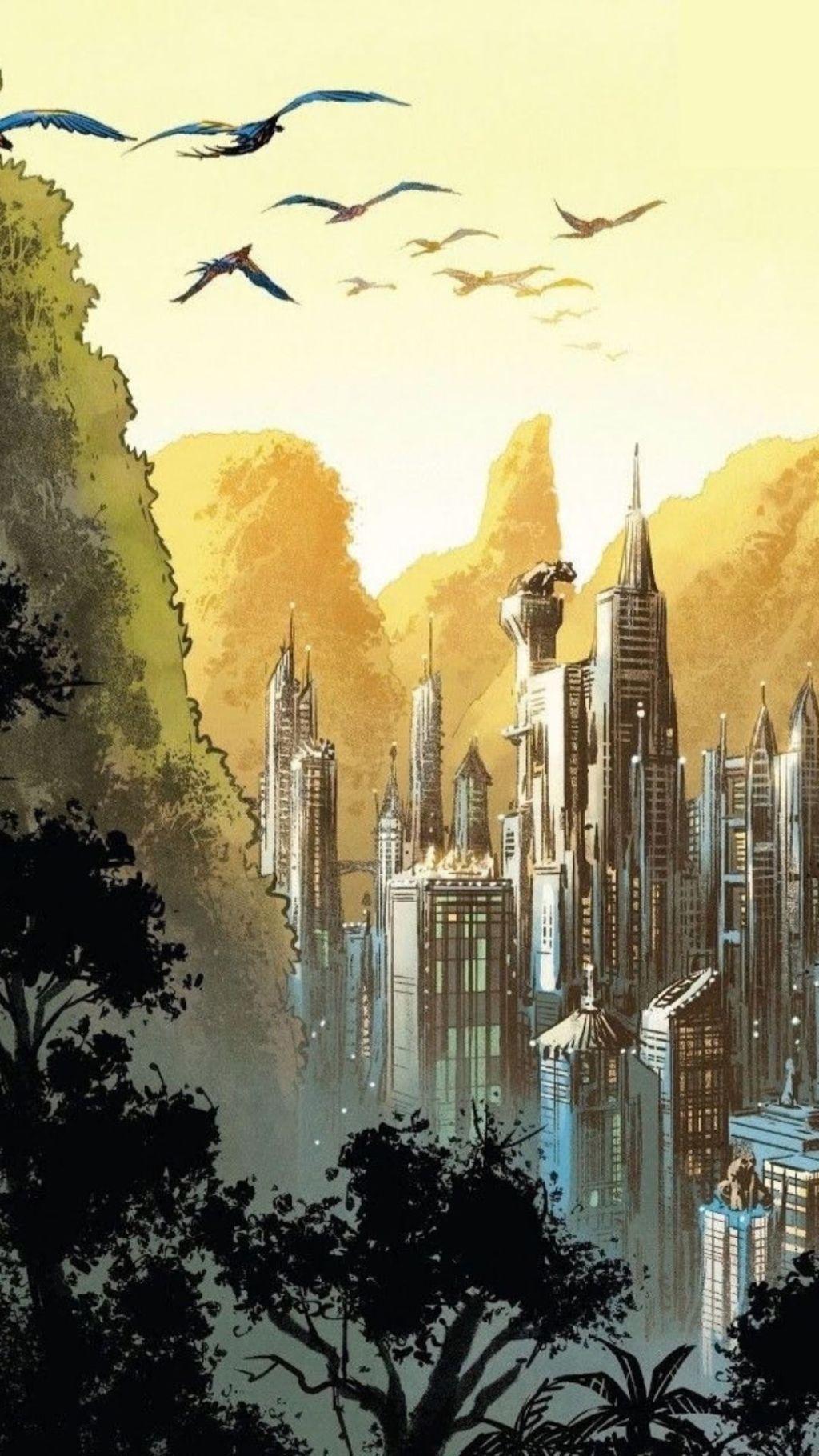
A skyline. A street. A castle. A marketplace. A particular arrangement of buildings, colours, landscapes, costumes, signs and lights. Before a character speaks or the story moves forward, the architecture of a fictional place can tell us where we are. Sometimes, the place becomes as recognisable as the characters who inhabit it.
So when does a fictional place become more than a setting? Can the visual identity of that place itself become intellectual property? The intuitive answer is yes. The legal answer depends on what, exactly, is being claimed.
A fictional world is rarely one indivisible creation. It may contain literary descriptions, illustrations, architectural designs, cinematography, production design, maps, characters, names, symbols, costumes, game environments and commercial branding. Some of these elements can attract intellectual property protection. Others cannot.
The distinction matters because copyright law does not give a creator ownership over an aesthetic vocabulary simply because they have used it successfully.
The real question, therefore, is not whether someone can copyright “Gotham” or own “Wakanda”. It is which particular expressions that make up those worlds are protected, under which rights, and where that protection ends.
A world is not one IP right
Fictional places occupy an unusual position in copyright law because they can exist as ideas, descriptions and specific expressions at the same time.
Consider Gotham. The idea of a fictional city associated with Batman is one thing. A particular comic-book depiction of its skyline is another. A production designer’s recreation of a Gotham street is another. A digital environment built for a Batman game is another. A logo or commercial sign associated with the franchise raises a different set of trademark questions.
It would therefore be misleading to reduce all of this to the statement that “Gotham is copyrighted”. The same problem appears with Hogwarts. The descriptions in J.K. Rowling’s books, the visual interpretation developed for the Harry Potter films, the digital environments created for games, and the branding surrounding the Wizarding World are different forms of expression. They can also involve different rights and different owners.
A fictional world is better understood as a collection of overlapping intellectual property interests. There is no single legal right that automatically covers everything belonging to that world.
That distinction becomes more important once a fictional place becomes commercially valuable. A recognisable location can appear in merchandise, advertising, games, theme parks and publishing. Its commercial identity can grow enormously even though the underlying rights remain divided.
Ideas are not property
The most basic limitation is also the one that matters most: copyright protects expression, not ideas. A creator might imagine a technologically advanced African kingdom hidden from the outside world. That broad idea cannot, by itself, become a copyright monopoly. What may receive protection is the particular way in which that idea is expressed.
The same principle applies to “a Gothic city”, “a magical castle”, “an Art Deco Miami”, or “futuristic African architecture”. This boundary matters because creative works are built from things that existed before them. Visual culture is particularly dependent on shared references. If a creator could claim ownership over Gothic architecture, neon-lit streets or a broad visual interpretation of African architectural traditions, later creators would have to navigate an increasingly crowded field of private aesthetic claims. Copyright cannot work that way.
It can protect the creator’s particular expression. It cannot turn the raw materials of creativity into private property.
Architecture is protectable, but architectural style is not
Architecture makes this boundary especially interesting. Under United States copyright law, architectural works are expressly recognised as a category of copyrightable subject matter, while ideas, concepts, principles and similar abstractions remain outside copyright protection. Indian copyright law also recognises works of architecture as artistic works, while limiting protection in architectural works to their artistic character and design rather than their methods or processes of construction.
The distinction is straightforward in theory. An original building design may be protected. The architectural style from which that design draws is a different matter. That becomes harder to see when dealing with fictional cities.
A particular visual representation of a Gothic Gotham may contain original expression capable of protection. That does not give DC ownership over Gothic architecture. A particular depiction of Wakanda may be protected as an expressive work, but that does not give Marvel ownership over African architectural traditions. The same visual vocabulary can therefore appear inside a protected work and outside it.
That is where the boundary between expression and aesthetic language becomes important.
Wakanda and the question of cultural influence
Wakanda presents a particularly interesting case because its visual identity was not created in an aesthetic vacuum.
The world depicted in Black Panther draws from African architecture, geography, clothing, cultural traditions and contemporary architectural thinking. The filmmakers and production designers researched different parts of Africa while developing Wakanda’s visual identity, and contemporary African architecture formed part of that conversation. The result is a fictional place with a highly recognisable visual identity. Recognition, however, does not automatically create ownership.
Marvel can protect particular original expressions created for Wakanda. That does not mean it owns the cultural references from which those expressions were developed. The distinction matters in fashion.
Suppose a designer draws from African textiles, silhouettes, jewellery, architectural forms or ceremonial dress and incorporates those references into a new collection. The existence of Wakanda as a commercially successful fictional universe does not give Marvel ownership over those underlying cultural references.
What may be protected is the designer’s original work and, separately, whatever rights another creator may have in their own protected expression. The cultural history itself is a different question.
This is where copyright reaches one of its limits. The distinction between inspiration and appropriation cannot always be resolved through copyright doctrine alone. Questions of cultural ownership, community rights and ethical appropriation can require a different legal conversation.
Vice City and the problem of building fiction from reality
Vice City presents almost the reverse situation. The fictional city in Grand Theft Auto: Vice City is heavily indebted to the visual language of 1980s Miami. Beaches, palm trees, neon signs, nightlife, luxury and urban decay belong to the world that Rockstar was depicting. They are not pieces of fictional property invented by the game.
Yet the particular way those elements were assembled into the game’s geography, environments, characters, narrative and digital spaces can constitute original expression. That distinction allows creators to work with reality without treating reality itself as someone else’s intellectual property.
Take-Two cannot own Miami. It cannot own palm trees or claim exclusive rights over the visual idea of neon-lit 1980s nightlife. Another creator can make a fictional city inspired by Miami.
What copyright may protect is the particular expressive construction found in the game, its original artwork, digital environments, characters, audiovisual elements and other protected material.
Originality has never required a creator to start from nothing. Creative works almost always involve existing material. What matters is the original expression contributed by the creator.
Gotham and the problem of aesthetic monopoly
Gotham raises the same issue from another direction. Darkness, Gothic architecture, imposing towers, industrial landscapes, crime-ridden streets and urban decay are deeply associated with Batman’s fictional city. They contribute heavily to the atmosphere audiences recognise as Gotham. But those ingredients cannot sensibly become DC’s private property individually.
A filmmaker can depict a Gothic city. An architect can design a neo-Gothic building. A fashion designer can work with a monochromatic Gothic visual language.
The legal problem changes when a new work copies sufficiently specific protected expression from an existing work. That is why the difference between “Gotham’s aesthetic” and “a particular depiction of Gotham” matters.
The first describes a collection of conventions and influences. The second may contain original expression capable of copyright protection. Aesthetic familiarity, by itself, is not ownership.
Hogwarts and the making of a commercial identity
Hogwarts shows what happens when a fictional location becomes deeply embedded in a commercial franchise. It begins as a literary setting. The films give it a physical and cinematic form. Visual effects, games, artwork, merchandise and later experiences build on that representation. Eventually, audiences can recognise a particular conception of Hogwarts even outside the original books. None of this creates a special category of “castle copyright”.
Instead, different layers of expression can attract different rights. The literary descriptions may contain copyrightable expression. A film contains its own visual and audiovisual expression. Particular artwork, designs, logos and commercial identifiers can raise separate copyright or trademark questions.
Hogwarts can therefore become an extremely valuable IP asset without becoming one indivisible piece of intellectual property. Its commercial value comes partly from the way these different rights work together and from the recognition audiences attach to the fictional world.
When the world leaves the screen
The most interesting problems appear when fictional architecture moves beyond its original medium.
A city created for a comic becomes a film set. A castle described in a novel becomes a cinematic environment. A game turns a fictional city into a space that players can walk through. A fictional visual identity appears on clothing, packaging, advertising or physical installations. Every new medium can introduce new expression.
A film adaptation can contain newly created visual and audiovisual works. A game can contain original digital environments. A merchandise design can involve artistic works and trademarks. A physical attraction can involve architecture and other forms of IP. The underlying franchise does not automatically absorb all of those creations into one legal category.
For an infringement claim, the relevant questions remain concrete: What work is protected? Which right is being relied upon? What expression is actually protected? What has been copied?
That discipline can sometimes get lost when people talk about fictional worlds as though they were single properties.
The same problem exists in fashion
The question extends well beyond fictional cities. Fashion constantly turns visual references into recognisable identities. Designers work with silhouettes, historical references, cultural traditions, colours, architecture, music, cinema and subcultures. Brands develop visual worlds around themselves.
Commercial success does not make an entire aesthetic proprietary. A designer may protect an original work. A brand may protect distinctive signs. Certain designs may qualify for design protection. Copyright and trademark law can each protect particular forms of expression or identifiers. What they cannot ordinarily do is give someone ownership over an entire style.
That is why fictional-world architecture has a place in fashion law. The underlying question is familiar: where does protectable expression end and shared visual culture begin?
Protecting a world without owning its visual language
It is tempting to ask whether Gotham, Wakanda, Hogwarts or Vice City is “copyrighted”. The question is easy to understand, but it collapses several different legal questions into one.
A fictional place can contain literary expression, visual artwork, architectural design, audiovisual material, trademarks and other forms of protected content. At the same time, it can contain ideas, facts, styles, cultural references and material drawn from the real world that remain available to others.
That division is part of how intellectual property is supposed to work. Creators need protection for original expression. Other creators need room to work with the cultural and visual material that surrounds all creative work. The law therefore has to draw a line somewhere between the world a creator has built and the visual language used to build it.
Gotham can be recognisable without DC owning Gothic architecture. Wakanda can have a distinctive visual identity without Marvel owning African architectural traditions. Vice City can evoke Miami without anyone owning Miami. Hogwarts can have a recognisable cinematic form without creating a new category of property called “fictional castle rights”. A fictional place can have an identity. It can become commercially valuable. It can be recognised from a single frame.
None of those things, by themselves, tells us where the legal boundary lies. The better question is what expression made that recognition possible, and whether that particular expression belongs to the creator as a matter of law.
If fictional worlds can be designed, rendered, inhabited and commercially exploited without ever physically existing, the harder question is not simply who owns the world?
It is how much of the imagination used to build that world can the law allow anyone to own?
References
- JK Rowling, Harry Potter and the Philosopher’s Stone (Bloomsbury 1997).
- JK Rowling, Harry Potter and the Chamber of Secrets (Bloomsbury 1998).
- JK Rowling, Harry Potter and the Prisoner of Azkaban (Bloomsbury 1999).
- JK Rowling, Harry Potter and the Goblet of Fire (Bloomsbury 2000).
- JK Rowling, Harry Potter and the Order of the Phoenix (Bloomsbury 2003).
- JK Rowling, Harry Potter and the Half-Blood Prince (Bloomsbury 2005).
- JK Rowling, Harry Potter and the Deathly Hallows (Bloomsbury 2007).
- Chris Columbus (dir), Harry Potter and the Philosopher’s Stone (Warner Bros Pictures 2001).
- Alfonso Cuarón (dir), Harry Potter and the Prisoner of Azkaban (Warner Bros Pictures 2004).
- David Yates (dir), Harry Potter and the Order of the Phoenix (Warner Bros Pictures 2007).
- Jack Kirby and Stan Lee, Fantastic Four no 52 (Marvel Comics 1966).
- Christopher Priest and Mark Texeira, Black Panther (Marvel Comics 1998).
- Ta-Nehisi Coates and Brian Stelfreeze, Black Panther (Marvel Comics 2016).
- Ryan Coogler (dir), Black Panther (Marvel Studios 2018).
- Ryan Coogler (dir), Black Panther: Wakanda Forever (Marvel Studios 2022).
- Bob Kane and Bill Finger, Batman no 4 (DC Comics 1940).
- Scott Snyder and Greg Capullo, Batman: Court of Owls (DC Comics 2012).
- Christopher Nolan (dir), The Dark Knight (Warner Bros Pictures 2008).
- Matt Reeves (dir), The Batman (Warner Bros Pictures 2022).
- Rockstar North, Grand Theft Auto: Vice City (Rockstar Games 2002).
- Rockstar North, Grand Theft Auto: Vice City Stories (Rockstar Games 2006).
- Avalanche Software, Hogwarts Legacy (Warner Bros Games 2023).
- DC, ‘A Brief History of Gotham City’ (10 October 2022).
- Jenn Fujikawa, ‘The Architectural Inspirations Behind Wakanda in Marvel Studios’ Black Panther’ (Marvel, 9 February 2018).
- Jenn Fujikawa, ‘How the Costumes of Black Panther Brought the World of Wakanda to Life’ (Marvel, 16 February 2018).
- Rockstar Games, ‘Grand Theft Auto: Vice City’.
- Copyright Act 1957 (India), ss 2(b), 2(c), 13 and 14.
- Trade Marks Act 1999 (India), ss 2(zb), 9, 11 and 29.
- Copyright Act 1976 (US), 17 USC §§ 101, 102 and 106.
- R G Anand v Deluxe Films (1978) 4 SCC 118.
- Eastern Book Company v DB Modak (2008) 1 SCC 1.
- Amar Nath Sehgal v Union of India 2005 SCC OnLine Del 163.
- DC Comics v Towle 802 F 3d 1012 (9th Cir 2015).
- Nichols v Universal Pictures Corp 45 F 2d 119 (2d Cir 1930).
- Warner Bros Pictures Inc v Columbia Broadcasting System Inc 216 F 2d 945 (9th Cir 1954).
- Baker v Selden 101 US 99 (1880).
- Star Athletica LLC v Varsity Brands Inc 580 US 405 (2017).
- World Intellectual Property Organization, ‘Copyright’.
- World Intellectual Property Organization, ‘Character Merchandising’.


Leave a comment