
Issued by the Editorial Board, Fashion Law IP Blog.
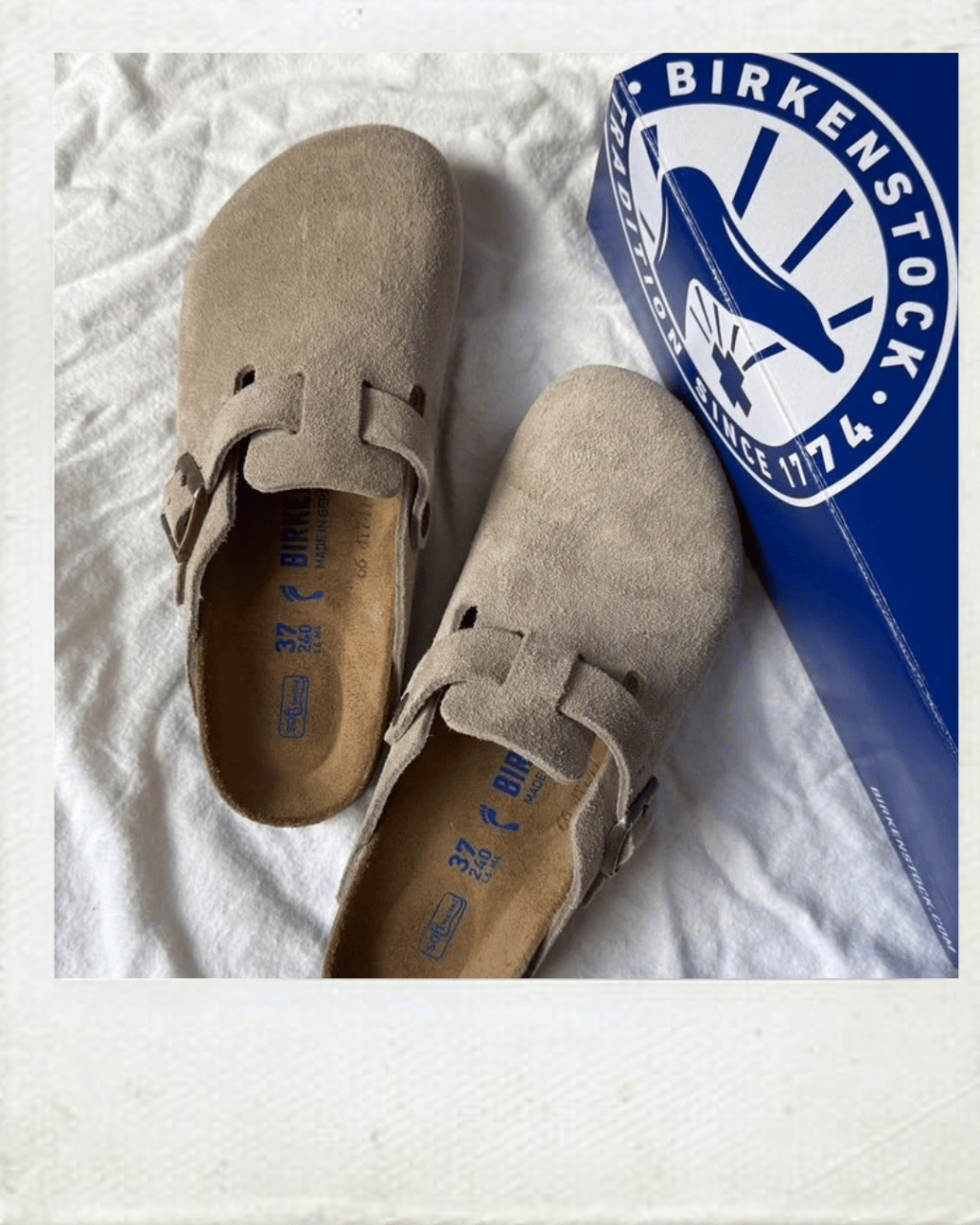
1. When a Sandal Becomes a Work of Art: Birkenstock v Lidl
Can a sandal be a work of art? In September 2026, a Dutch court answered yes, at least for Birkenstock. On 23 September, the District Court of Gelderland, sitting in Arnhem, ordered Lidl to stop selling lookalikes of the Arizona, Madrid, Gizeh, Boston and Florida models in the Netherlands, finding that they infringed Birkenstock’s copyright, in particular in its footbed design.
The ruling sits on top of a significant change in EU law. In December 2025, the Court of Justice of the European Union held in Mio and Konektra that works of applied art are not subject to a higher originality threshold than other works. Protection depends on whether the design reflects the author’s free and creative choices, rather than choices dictated solely by technical or functional constraints. The Court also shifted the infringement question away from overall visual impression toward whether the protected work’s creative elements were reproduced recognisably.
What makes the decision interesting is the divide it exposes. Earlier in 2025, Germany’s Federal Court of Justice treated Birkenstock’s sandals as functional products rather than works of art and refused them copyright protection. Courts in neighboring countries have therefore treated the same shoe differently. The Dutch decision is also limited in reach. The injunction applies in the Netherlands only; the court said it could not enforce an order against Lidl’s German parent company to change sales elsewhere, and a penalty of EUR 5,000 applies for each day of non-compliance. The judgment is a first-instance decision and can still be appealed.
For fashion and footwear brands, the practical lesson is that copyright in a product design is not automatic. A claim has to identify which features reflect creative choices and separate them from features driven by function. That analysis matters for enforcement too, because a competing product that merely creates a similar overall look may not be enough.
The Arnhem decision does not settle the question across Europe. It does show that, after Mio and konektra, function does not automatically cancel creativity, and that the shape under a foot can still have an author.
2. When the Shoe Is Seen on the Run: New Balance v Decathlon
Trademark confusion does not always happen at the till. On 15 September 2026, New Balance sued Decathlon in the US District Court for the District of Massachusetts over a logo used on Decathlon’s KIPRUN running shoes, alleging that the design infringes its ‘N’ trademarks. Decathlon has maintained that the design is a stylised ‘K’. New Balance says the retailer also uses a mirror image of it, which looks like an ‘N’.
The complaint sets out claims of trademark infringement, false designation of origin, federal and state dilution, and common law claims. At its core is post-sale confusion. This doctrine extends liability beyond the person who buys the product to people who see it afterwards. New Balance argues that the risk is heightened in performance running, where shoes are seen on sponsored athletes, at sporting events and in photographs and coverage, and where onlookers may assume a connection with New Balance.
The dispute also has a commercial backstory. New Balance says that Decathlon affiliates distribute New Balance products in a number of markets, and that it notified Decathlon of the alleged infringement around January 2026. It alleges that Decathlon nevertheless continued to release shoes with the design, and describes the conduct as willful or at least reckless. It seeks an injunction, a recall and refunds, destruction of goods, an accounting of profits, damages and attorneys’ fees. These are allegations in a newly filed complaint and have yet to be tested.
The case also joins a wider pattern. Post-sale confusion has long been criticised by scholars because it can stretch trademark law beyond the purchasing decision, yet it keeps returning, from luxury counterfeiting disputes, such as Chanel’s case against a Hamptons retailer covered in last month’s brief, to merchandise cases such as Penn State’s litigation against Vintage Brand.
The question for the court is how far source confusion can travel from the transaction. When a shoe is seen on a runner rather than on a retail shelf, is the relevant consumer the buyer, or everyone who watches the race?
3. Clogs, Charms and the Layers of a Product: Crocs v Five Below
A clog is a shoe, but for Crocs it is also a platform. On 18 September 2026, Crocs, Inc and Jibbitz, Inc. filed a complaint in the US District Court for the District of Colorado against discount retailer Five Below, accusing it of infringing the Classic Clog trade dress, a footwear design patent and three utility patents covering systems used to secure decorative charms to footwear.
The accused products are Five Below’s ‘Juniors Charm Clogs’ and a clog-shaped ‘Novelty Shoe Purse’. The trademark claims rest on two federal registrations covering elements of the Classic Clog’s three-dimensional design, including its pattern of holes, trapezoidal openings and textured band. The design patent concerns the ornamental design of the Saru clog, while the Jibbitz patents are directed at how charms are attached to shoes.
The structure of the complaint is the interesting part, because each right targets a different aspect of the alleged conduct. Trade dress turns on confusion caused by source-identifying features. The design patent protects ornamental appearance. The utility patents protect how charms and shoes function together, which allows Jibbitz to challenge the system created when charms are combined with molded shoes, even if Five Below’s charms do not look like Jibbitz charms.
Crocs says it sent a demand letter on 4th March identifying the products and its rights, and that Five Below acknowledged it twice but kept selling the products until as recently as June. These allegations have yet to be tested. Trade dress in product design is also not easy to win. In the United States, a product’s design can be protected as trade dress only if it has acquired distinctiveness, meaning consumers must associate the look with a single source.
For brands, the message is to build protection around how a product is actually sold and used, not only how it looks on the shelf. For retailers selling lower-priced lookalikes, it is that a single product can be exposed on several legal fronts at once.
4. A Missing Vowel, a Real Infringement: Flowerbx v Flowers Box London
Can a missing vowel keep a rival out of infringement? In Flowerbx Ltd v Flowers Box London Ltd, decided on 7 September 2026, the Intellectual Property Enterprise Court said no. Recorder Amanda Michaels found that the rival florist’s use of FLOWERSBOX, FLOWERS BOX and FLOWERS BOX LONDON infringed the registered UK word mark FLOWERBX.
The defendant’s main defence was to attack the mark itself. It argued that FLOWERBX is simply the words ‘flower box’ and is therefore descriptive under section 3(1)(c) of the Trade Marks Act 1994. The court accepted that the mark would be pronounced as ‘flower box’, but held that this was not enough to make it descriptive of the specific goods and services registered, such as flowers, plants and related retail services. The invalidity counterclaim was dismissed.
On infringement, the court found a high degree of visual, aural and conceptual similarity, and treated FLOWERSBOX as particularly close despite the extra ‘S’ and the missing ‘O’. The evidence of actual confusion was significant, including customers who meant to order from Flowerbx but ordered from Flowers Box London, and mistaken contacts and reviews. The judge also found that the defendant must have become aware of the potential for confusion soon after it began trading in 2019, when it received messages from Trustpilot congratulating it on five-star reviews that were in fact for Flowerbx.
The claim also succeeded on the basis that the defendant took unfair advantage of the reputation of the FLOWERBX mark. The court was not persuaded, however, that the evidence showed a serious risk of detriment or tarnishment. Remedies are to be decided separately.
For fashion, luxury and lifestyle brands, the lesson is that a name built from ordinary words can still be a strong mark if it is distinctive in context and backed by reputation. The court found the mark inherently distinctive and, in any event, to have acquired distinctiveness before the defendant was incorporated. In branding, a small spelling choice can matter, but only if the brand is prepared to prove what the spelling has come to mean.
5. India’s Trademark Playbook: The Consultation Closes
The Revised Trade Marks Manual
Last month’s brief noted that India’s Trade Marks Registry had published a Revised Draft Manual of the Trade Marks Office Practice and Procedure. In September, that consultation closed. The public notice of 21 August 2026 invited comments within 15 days, which took the deadline to about 5 September. On the sources available, the manual has not yet been reported as finalised, so it remains proposed Registry practice rather than settled procedure.
That distinction matters. The Trade Marks Act 1999 and the Trade Marks Rules 2017 remain the controlling law. A manual cannot change them, but it can shape how hearings, examinations and other proceedings are handled day to day. For fashion businesses, whose brand value often depends on how predictably a mark moves through the Registry, those operational details are not minor.
The consultation also had a companion. On 19 August 2026, a Draft Manual of Patent Office Practice and Procedure, Version 4.0, 2026, was published for a separate 30-day comment period. It concerns patents rather than fashion trademarks, but together the two drafts suggest an IP Office trying to set out its practice in a more consistent and transparent form.
Practitioners have also cautioned applicants to check the Registry’s notices page before relying on these dates, because consultation periods can be extended and manuals can be finalised later.
For Indian fashion and lifestyle brands, the sensible course is to watch for the final text and to review how existing filings, oppositions and renewals might be handled under it. In trademark prosecution, the fine print is rarely glamorous, but it decides a great deal.
References
1. Birkenstock IP GmbH & Co KG and others v Lidl, District Court of Gelderland (Arnhem), judgment of 23 September 2026.
2. Joined Cases C-580/23 and C-795/23 Mio AB and Konektra GmbH (CJEU, 4 December 2025).
3. New Balance Athletics, Inc v Decathlon America LLC and others, No 1:26-cv-14235 (D Mass, filed 15 September 2026).
4. Chanel, Inc v Taroo Second, Inc and others, No 1:24-cv-09038 (SDNY).
5. Hermès International v Lederer de Paris Fifth Avenue, Inc 219 F 3d 104 (2d Cir 2000).
6. Crocs, Inc and others v Five Below, Inc, No 1:26-cv-04606 (D Colo, filed 18 September 2026).
7. Wal-Mart Stores, Inc v Samara Brothers, Inc 529 US 205 (2000).
8. Flowerbx Ltd v Flowers Box London Ltd [2026] EWHC 2233 (IPEC).
9. Directive 2001/29/EC of the European Parliament and of the Council on the harmonisation of certain aspects of copyright and related rights in the information society [2001] OJ L167/10.
10. Lanham Act, 15 USC §§ 1114, 1125(a), 1125(c).
11. Patent Act, 35 USC §§ 171, 271.
12. Trade Marks Act 1994, ss 3(1)(c), 10(2)(b), 10(3).
13. Trade Marks Act 1999.
14. Trade Marks Rules 2017.
15. Office of the Controller General of Patents, Designs and Trade Marks, ‘Invitation for Comments and Suggestions on Revised Draft Manual of the Trade Marks Office (Practice & Procedure)’ (21 August 2026).
16. Office of the Controller General of Patents, Designs and Trade Marks, Draft Manual of Patent Office Practice and Procedure, Version 4.0 (19 August 2026).
17. Office of the Controller General of Patents, Designs and Trade Marks, Revised Draft Manual of the Trade Marks Office (Practice & Procedure) (2026).
18. Birkenstock Group B.V. & Co. KG, ‘Birkenstock Wins Copyright Case Against Lidl: Dutch Court Orders Injunction Against Lookalikes of Birkenstock Classics’ (press release, 24 September 2026).
19. NL Times, ‘Dutch Court Bans Lidl from Selling Copycat Birkenstock Sandals’ (24 September 2026).
20. Grocery Gazette, ‘Lidl Banned from Selling Birkenstock Lookalikes after Copyright Ruling’ (24 September 2026).
21. The Fashion Law, ‘Birkenstock Wins Lidl Case as Courts Split on Sandal Copyright’ (25 September 2026).
22. The Fashion Law, ‘New Balance’s Decathlon Lawsuit Puts Post-Sale Confusion in Focus’ (16 September 2026).
23. The Fashion Law, ‘Crocs Targets Five Below Over Clogs, Charms in New Lawsuit’ (21 September 2026).
24. The Fashion Law, ‘Flowerbx Trademark Win Puts Enduring Branding Trend in Focus’ (9 September 2026).
25. Pillsbury Winthrop Shaw Pittman LLP, ‘Blooming Confusion and the Importance of Cultivating a Reputation: Flowerbx Ltd v Flowers Box London Ltd’ (11 September 2026).
26. Law Gazette, ‘Beckham’s Luxury Florist Wins Trademark Infringement Case Against Rival’ (16 September 2026).
27.Solicitor News, ‘Flowerbx Trademark Dispute Ends with Infringement Finding’ (September 2026).
28. Intepat, ‘India’s Draft Trade Marks Manual 2026: What Applicants Should Know’ (2 September 2026).


Leave a comment